Blogia

CLASS OF 2010-2011!!!

PAPIROFLEXIA


Este arte de papel os ayudará a desarrollar la imaginación además de demostraros que la sencillez de las cosas no es siempre lo que parece.

La papiroflexia es un arte de origen japonés que se conoce con el nombre de origami. Es una gran ayuda para la educación, no sólo ya para los niños sino también para los adultos. Sus cualidades son de lo más positivo para la mente humana. Las personas que desarrollan el arte de la papiroflexia ejercitarán su concentración y atención. Pondrán a prueba su destreza y exactitud, lo que conlleva a un fortalecimiento de la autoestima a través de la creación de un objeto. Además desarrollarán su coordinación y su imaginación.

La papiroflexia es una de las actividades más aconsejables para los niños porque mantiene activa su inteligencia y ayuda a desarrollar su memoria. Los expertos aseguran que si un niño comienza una actividad manual a edad temprana alcanzará una mayor madurez cerebral, lo que incrementará su desarrollo intelectual. Además los niños que estén en contacto con tareas artísticas desde pequeños distinguirán mejor entre realidad y arte, es decir, la ubicación de un objeto en el espacio.

La papiroflexia es una tarea sencilla que sólo requiere de paciencia e imaginación. Para no desnimaros a seguir con esta curiosa actividad, debéis empezar por cosas fáciles, como el pececito que os enseña a hacer este video.

Poco a poco, iremos incluyendo diferentes videos explicativos para que os entretengáis mientras váis mejorando vuestras habilidades manuales.


NON-SENSE POEMS

Your teachers are really impressed with the poems you have created. We love them!! Guiño

In fact, we’re going to make a book with all your ideas to leave in the school library. So, those of you who haven´t written the poems yet, don’t forget to do it for next week.

We want to have a written poem of all of you!!!

Here you have a few websites in which you can see more examples of silly poems that you may enjoy reading.

Poetry for Kids

Children’s Nonsense Poems

Aniversario del nacimiento de músico español ISAAC ALBÉNIZ


Isaac Manuel Francisco Albéniz y Pascual (Camprodón, España; 29 de mayo de 1860 – Cambo-les-Bains, Francia; 18 de mayo de 1909) fue un célebre compositor y pianista español

A pesar de ser un famoso compositor de piano, Isaac Albéniz de ningún modo se limitó a la música para dicho instrumento. De hecho, dedicó más de una década de sus casi cuarenta y nueve años en vida a escribir temas para teatro (temas que recibieron recientemente una especial atención con el reestreno de su más exitoso trabajo operístico, Pepita Jiménez, interpretaciones de conciertos y la grabación de Merlín), mientras que intermitentemente durante su carrera escribió canciones -más de dos docenas- así como varios temas orquestales y de cámara.

POP ART


Pop art is a style of art from the 1950s and 1960s. In many parts of the world life was changing fast at that time. For the first time, people were driving fast cars, eating fast food, watching colour television and listening to pop music. There were lots of new things in the shops, and there were lots of adverts. The adverts were bright and colourful, and they attracted people’s attention.

Pop artists were interested in modern things like adverts and television. They wanted to make art that was popular and fun. They made pictures and sculptures of ordinary things. There were lots of Pop artists in Britain and the USA.

Here you have a very good introduction to the pop art style as well as a number of great pop artists.


18 y 20 de mayo: AVENTURA AMAZONIA


Los próximos días 18 y 20 de mayo nos vamos a Cercedilla a vivir una nueva aventura en la naturaleza.

Echad un vistazo a la página web en la que encontraréis mucha de la información necesaria para emprender esta aventura.

Aventura Amazonia


INTERACTIVE GRAMMAR GAMES

This website offers a rich variety of grammar games according to grammar topics. There are grammar games like: Snakes and Ladders, Basketall, Football, Hangman, Wheel of Fortune, TV Games and more to help practice grammar.

ESL INTERACTIVE GRAMMAR GAMES

150th Anniversary of J. M. Barrie's birth

Sir James Matthew Barrie, 1st Baronet, OM (9 May 1860 – 19 June 1937) was a Scottish author and dramatist, best remembered today as the creator of Peter Pan. The child of a family of small-town weavers, he was educated in Scotland. He moved to London, where he developed a career as a novelist and playwright. There he met the Llewelyn Davies boys who inspired him in writing about a baby boy who has magical adventures in Kensington Gardens (included in The Little White Bird), then to write Peter Pan, or The Boy Who Wouldn’t Grow Up, a "fairy play" about this ageless boy and an ordinary girl named Wendy who have adventures in the fantasy setting of Neverland. This play quickly overshadowed his previous work and although he continued to write successfully, it became his best-known work, credited with popularising the name Wendy, which was very uncommon previously. Before his death, he gave the rights to the Peter Pan works to Great Ormond Street Hospital, which continues to benefit from them.


The Lasting Legacy of JM Barrie and Peter Pan

May 2010 marks the 150th anniversary of Scottish author JM Barrie’s birth. We look at the lasting power of Peter Pan.

When Scotsman James Matthew Barrie scratched the sentence: ’All children, except one, grow up’, on to a piece of paper in his house at Bayswater Road, London, he could never have imagined the lasting impression his words would leave.

They form the opening line to Peter Pan: a tale of fairies and pirates which has enchanted children all over the world for more than a century.

First staged at the Duke of York Theatre, London, 27th December 1904, the popularity of Peter Pan sealed Kirriemuir-born Barrie’s place in literary history forever.

One hundred and fifty years on from his birth, the world remains captivated, just as Peter stays eternally locked in the magic of childhood.


When Barrie died at the age of 77, he had critical acclaim, a baronetcy, an Order of Merit and an impressive list of works to his name. No single work would be remembered, however, like Peter Pan.

Inspired by the five sons of Arthur and Sylvia Llewelyn Davies, whom Barrie met while walking his giant St Bernard dog, Porthos, in Kensington Gardens, Peter Pan has been translated into almost 100 languages.

A timeless dilemma

One of the reasons for the enduring, global, appeal of Peter Pan is its universal theme.

Whether or not we believe in mischievous flying fairies, canine nannies or ticking crocodiles, none of us – except Peter – can escape the reality of growing old.

Barrie knew the play’s widespread appeal would make for enjoyable drama. He did not appreciate how deeply it would enter global consciousness.

Following the success of the stage drama and novel, Peter Pan became the subject of a silent movie. The 1924 film would be the first of many cinematic versions. At that time, it was rumoured Charlie Chaplin – the king of silent cinema – would play Peter.

Amongst Barrie’s friends were Sir Arthur Conan Doyle, H. G. Wells and theatre producer, George Frohman. He enjoyed a lengthy correspondence with Robert Louis Stevenson and was the neighbour of George Bernard Shaw. Barrie, too, was one of the last people Captain Robert Falcon Scott wrote to, before perishing on his return from the South Pole.

Peter becomes a Disney star

In his own lifetime, Barrie saw Peter Pan re-enacted in various forms on stage. The coming of the movie era, however, took it to a level almost incomprehensible.

The Walt Disney Animated Classic version of 1953 made over 87 million dollars in revenue. The 1991 Steven Spielberg movie Hook, starring Dustin Hoffman, Robin Williams and Julia Roberts took 120 million dollars at the box office.

Script writers have continued to see potential in Barrie’s story, and the complex narrative of his own life, beyond the century in which it was written.

The film, Return to Neverland (2002) was a favourite of the late Michael Jackson, inspiring the construction of the singer’s Neverland ranch at Santa Barbara. A year later, Jeremy Sumpter won a Saturn award for his leading role in Peter Pan. Finding Neverland with Kate Winslett and Johnny Depp explored Barrie’s relationships with the Davies family and won an Academy Award and six Oscar nominations.

Barrie’s lasting gift

While Peter Pan – the story – has continued to delight youngsters the world over, it has also helped in the care of sick infants for over 80 years.

Barrie gifted the rights to Peter Pan to Great Ormond Street Hospital in London in 1929. It still receives royalties from all productions and publications.

"It was an inspired legacy, an amazing gift," admits Christine De Poortere, Peter Pan Director of Great Ormond Street Hospital Children’s Charity. "It has been successful, not just in terms of royalties, but as a symbol of the hospital itself."

A bright future for Peter

Today, Peter Pan still inspires new publications, comics, fairground rides and even Nintendo video games. Its adaptations include a live action musical for Belarussian TV. There are seven Peter Pan statues worldwide and three race horses have taken its name. The first phase of a £340,000 project to create a Neverland themed play area in Barrie’s hometown of Kirriemuir is underway, ensuring the children of the Little Red Town continue to benefit from their favourite son.

Visitors to Barrie’s hometown are expected to soar in this anniversary year. In Kirriemuir, you can visit the cottage at 9 Brechin Road where the author was born. The adjacent house contains an exhibition and the outside wash-house, supposedly Barrie’s first theatre, still stands. Barrie is buried in Kirriemuir Cemetery and on the scenic Kirriemuir Hill, the pavilion and camera obscura gifted to the town by Barrie in 1930 stands proudly over the Angus countryside – a reminder of his time there and his legacy.


ÁLVARO (5ºC) RECOMMENDS:

¿Sabes ya dónde está Valladolid? ¿y Soria y Teruel?

Álvaro Montalvo nos recuerda un juego para practicar la situación de las comunidades autónomas de España y sus provincias.

Esperamos que os guste.

Provincias de España


LA POBLACIÓN DE ESPAÑA

Pincha en Juegos interactivos - "alumnado", después en 3er ciclo. Una vez en las actividades del 3er ciclo, pincha en la bola del mundo "mi planeta" y después en el cartel con la gráfica de "la población de España". Ahí encontraras información y distintas actividades para reforzar lo aprendido en clase en la unidad 12.


Unit 12: DIFFICULT WORDS


Phoenicians: Phœnicia was an ancient civilization centered in the north of ancient Canaan, with its heartland along the coastal regions of modern day Lebanon, Syria and Israel.

Carthaginians: the first civilization that developed within the city’s sphere of influence. It refers to a series of cities on the Gulf of Tunis, from a Phoenician colony of the 1st millennium BCE to the current suburb outside Tunis, Tunisia.

Visigoths: the Visigoths were one of two main branches of the Goths, an East Germanic tribe; the Ostrogoths being the other. Together these tribes were among the barbarians who disturbed the late Roman Empire during the Migration Period.

Inhabitant: a person or animal that lives in a place.

Rural: connected with the country, not the town.

Urban: connected with a town or city.

DÍA DE LA MADRE


El Día de la Madre o Día de las Madres es una festividad que conmemora a las madres. Se celebra en diferentes fechas del año según el país. El moderno Día de la Madre fue creado por Julia Ward Howe, en 1870, originalmente como un día de madres por la paz, que luego derivó en un día para cada familia en honor a su madre y se ha convertido en una fiesta en muchos lugares del mundo.

Antecedentes históricos

Las primeras celebraciones del Día de la Madre se remontan a la antigua Grecia, donde se le rendían honores a Rea, la madre de los dioses Zeus, Poseidón y Hades.

La Encyclopædia Britannica dice: "Una fiesta derivada de la costumbre de adorar a la madre en la antigua Grecia. La adoración formal a la madre, con ceremonias a Cibeles, o Rea, la Gran Madre de los Dioses, se ejecutaba en los idus de marzo por toda Asia Menor".

Igualmente los romanos llamaron a esta celebración La Hilaria cuando la adquirieron de los griegos y se celebraba el 15 de marzo en el templo de Cibeles y durante tres días se hacían ofrendas.

Los primeros cristianos transformaron estas celebraciones en honor a la Virgen María, la madre de Jesús. En el santoral católico el 8 de diciembre se celebra la fiesta de la Inmaculada Concepción, fecha que se mantiene en la celebración del Día de la Madre en algunos países como Panamá.

En Inglaterra hacia el siglo XVII, tenía lugar un acontecimiento similar, también a la Virgen, que se denominaba Domingo de las Madres. Los niños concurrían a misa y regresaban a sus hogares con regalos para sus progenitoras

Fechas

La mayoría de los países lo festejan en mayo, frecuentemente un segundo domingo de mayo.

Segundo domingo de febrero Noruega
Cuarto domingo de la cuaresma, formalmente Mothering Sunday Irlanda, Reino Unido
8 de marzo (Día Internacional de la Mujer) Albania, Bosnia y Herzegovina, Macedonia, Montenegro, Rumanía, Serbia, Bulgaria, Rusia y otros países pertenecientes a la ex URSS
21 de marzo (Día de la primavera) Egipto, Líbano, Marruecos, Territorios Palestinos, Siria
Primer domingo de mayo España, Hungría, Lituania, Portugal, Sudáfrica
Segundo domingo de mayo Alemania, Australia, Austria, Bélgica, Brasil, Chile, China, Canadá, Colombia, Croacia, Cuba, Dinamarca, Ecuador, EEUU, Estonia, Filipinas, Finlandia, Grecia, Holanda, Honduras, Italia, Japón, Letonia, Liechtenstein, Nueva Zelanda, Perú, Puerto Rico, República Checa, Suiza, Taiwan, Turquía, Ucrania, Uruguay , Venezuela, (salvo excepciones donde se celebra el tercer domingo de mayo).
8 de mayo Albania, Corea del Sur
10 de mayo Arabia Saudita, El Salvador, Emiratos Árabes Unidos, Guatemala, India, Malasia, México, Omán, Pakistán, Qatar, Singapur
14 de mayo Samoa
15 de mayo Paraguay
26 de mayo Polonia
27 de mayo, a causa de las Heroínas de la Coronilla Bolivia
30 de mayo Nicaragua
Último domingo de mayo República Dominicana, Suecia
Último domingo de mayo o primer domingo de junio Francia
12 de agosto Tailandia (Cumpleaños de la reina Sirikit Kitiyakara)
15 de agosto, Día de la Asunción Amberes (Bélgica), Costa Rica
El tercer domingo de octubre Argentina
8 de diciembre, Día de la Inmaculada Concepción Panamá
22 de diciembre Indonesi

CHOPIN'S QUIZ: Answers

La pregunta del lunes / Monday’s question:

How old was Chopin when he composed the Polonaise? And Liszt?

The Polonaise in A-flat major, Op. 53 for solo piano was written by Frédéric Chopin in 1842. As Chopin was born in the 1810, he wrote the Polonaise when he was 32. Liszt was born a year later, in 1811, so he was 31 when Chopin composed the Polonaise.


La pregunta del martes / Tuesday’s question:

¿Cuál es la duración media de cada uno de los veintiún nocturnos escritos por Chopin?

En total, Chopin tardó en componer todos sus nocturnos un tiempo de unos quince años. Entre ellos no suman más de dos horas de música, aunque eso depende mucho de la interpretación que se les dé. Cada uno tiene una duración media de algo más de cinco minutos.


La pregunta del miércoles/ Wednesday’s question:

¿Con qué edad empezó Chopin a escribir sus Estudios? ¿Y cuántos compuso en total?

El germen de los Estudios Op. 10 se comenzó a gestar en Varsovia, a partir de fines de 1829 cuando Chopin tenía 19 años. Cuando se publicaron, tenía 23 años y ya era famoso como compositor y pianista en los salones de París.

A lo largo de su corta vida, el maestro polaco escribió veintisiete estudios, repartidos de la siguiente manera: doce en el Op. 10, doce en el Op. 25 y tres sin numerar para un libro de método.


La pregunta del jueves/ Thursday’s question:

Which town is the hometown of Joaquín Achúcarro? How is the climate over there? And how is the climate in Mallorca?

Joaquín Achúcarro was born (November 1, 1932) in Bilbao, Spain. He began piano lessons at the Bilbao Conservatory and, in 1956, at the age of 13, made his concerto debut in Bilbao playing a Mozart concerto with a local orchestra.

Bilbao is in the Basque Country where there is an Atlantic climate so the temperatures are mild all year, cooler in winter than in summer. The rain is abundant all year and because of that there are many meadows and deciduous woods, with trees like the chesnut and the oak.

Mallorca where Chopin spent a miserable winter (from 8 November 1838 to 13 February 1839), is in the Balearic Island. Mallorca has a Mediterranean climate. It has mild temperatures in winter and warm in summer. Thee is little rain and it is irregular, in fact, in autumn, there can be torrential rains. The most common trees are the holm oak, the cork oak and the pine, there are also many bushes.


La pregunta del viernes/ Friday’s question:

Can you tell me the name of five Romantic composers? And the name of other famous composer born in 1810?

A few Romantic composers:

Franz Liszt, Robert Schumann, Tchaikovski, Gustav Mahler, Camille Saint-Saëns, Franz Schubert, Johannes Brahms, Bedrich Smetana, Antonín Dvorák, Georges Bizet, Hector Berlioz y Ludwig van Beethoven, entre otros.

Robert Schumann, the German composer and influential music critic, was born in June 1810. He is one of the most famous and important Romantic composers of the 19th century.


Congratulations Alba, Naiara and Lydia!!! You’re the only ones who have answered all the questions right.

Thank you for your participation!!!

CHOPIN: Vals en La bemol Op 69 nº 1


Para el último día de nuestra Semana Cultural, hemos elegido "El Vals del Adios" escrita por Frédéric Chopin como cierre de una alegre y musical semana en la que, además, hemos sentido llorar nuestros corazones...

Todo nuestro amor para nuestra compañera Rosa María Elena Elena. Descansa en Paz.


Waltz in A-flat major, Op. 69, No. 1, is a waltz by Frédéric Chopin, It is also called The Farewell Waltz or Valse de l’adieu.

The waltz was originally written as a farewell piece to Maria Wodzińska, to whom Chopin was once engaged.

The waltz is in A flat major, with a time signature of 3/4. The tempo is marked at tempo di valse, or a waltz tempo. The beginning theme, marked con espressione, is melancholic and nostalgic, and reaches a small high point with a fast flourish. The second part is marked sempre delicatissimo, or con anima in other versions. It is somewhat more cheerful that the previous theme, but soon gives way to the same first theme. After a second rendition of the first theme is a third theme, marked as dolce, the most playful theme. It leads to another theme with a series of ascending double-stops. This fourth theme is marked poco a poco crescendo, with other editions adding ed appassionato. This leads back to the third, playful theme, and returns back to the beginning with a da capo al fin.


La pregunta del viernes/ Friday’s question:

Can you tell me the name of five Romantic composers? And the name of other famous composer born in 1810?

(Leave your answers and, at the end of the week, those of you who give the right answers will have a prize...)

These are the last questions of the quiz. On Monday we’ll give you the right answers and those of you who have answered properly will have the opportunity of choosing a prize...

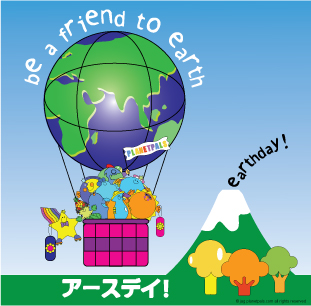
22nd April: EARTH'S DAY

        The Story of Earthday

                                                                   planetpals Earthday

Earth Day i in the Spring Every Year.


What is Earth Day?

Earth Day was started in 1970 by a man named John Mc Connell from the United States. It was originally held on the annual celebration of the March Equinox and still is by many people. However, it is generally celebrated on April 22. Earth day is now celebrated worldwide.

When is Earth Day and Earth Month?

The UN designated April 22 Earthday and April earth month.

What is the History of Earth Day?

Earth Day is a very special day specifically designed for all of us to think about earth issues . It is not only a special day in the town where we live, but a day that the whole world participates in! Often there are celebrations, events or campaigns that concern us with earth matters.

Some towns have Earth Day celebrations, and some people and groups participate in Earth Day project.

You can participate in one of the existing projects, or start one of your own. Perhaps a small project with your mom or dad such as planting a tree, or a large project with your classroom or neighborhood friends such as a park clean up. The possibilities are endless. Try to think of something you would like to do-you too, can make a difference!

Don’t miss the Earth Day Pages for special fun activities, crafts and games to do in celebration of this Earth Day! It’s jam packed!

See more Earth Day activities pages, full of ideas to make Earth Day a meaningful day!


CHOPIN's 24 Preludes


Joaquín Achúcarro, one of the best Spanish pianists (and I’m proud to say that he is also my parents’ friend and neighbour), performs selections from Chopin’s 24 Preludes at the International Keyboard Institute & Festival in 2007.


Los Preludios para piano solo compuestos por Frédéric Chopin son un conjunto de veinticuatro preludios que conforman el Op. 28 del compositor polaco. Todos ellos son piezas bastante breves, de entre treinta segundos y cinco minutos de duración; y cada uno está escrito en una tonalidad distinta. Chopin tiene otros dos preludios, de los que uno es póstumo y el otro pertenece al Op. 45.

Chopin compuso sus preludios entre 1835 y 1839, en parte en la localidad mallorquina de Valldemossa, donde pasó el invierno de 1838-1839 para evitar el clima lluvioso de París. Sin embargo, este método de mejorar de sus enfermedades no funcionó, porque ese invierno fue muy duro en la isla. Además, tardaron mucho en traerle su piano desde Francia y tuvo que conformarse con uno que le dejaron, que se puede ver en la Cartuja de Valldemossa, donde estaban sus habitaciones. Los Preludios Op. 28 fueron publicados por primera vez en 1839.

Aunque el término preludio se utiliza por lo general para referirse a un pieza introductoria, los Preludios de Chopin son ya piezas completas por sí mismas, hechas todas y cada una de ellas para comunicar una idea o un sentimiento. Los Preludios de Chopin ha sido comparados con los preludios de El clave bien temperado de Johann Sebastian Bach. Sin embargo, todos los preludios del alemán llevan a una fuga en la misma tonalidad y estaban ordenados cromáticamente, mientras que los de Chopin estaban ordenados por quintas.

Debido a su aparente falta de estructura formal y a su brevedad, los Preludios provocaron consternación entre los críticos de la época cuando fueron publicados. Ninguno de los preludios dura más de noventa compases —que son los que tiene el Preludio n.º 17—, y el más corto, el n.º 20, sólo ocupa trece compases. Robert Schumann dijo de ellos que "son esbozos, comienzos de estudios o, por así decirlo, ruinas, alas individuales de águila, todo desorden y confusiones salvajes". Por otro lado, la opinión de su amigo Franz Liszt puede calificarse de positiva: "Los Preludios de Chopin son composiciones de un calibre totalmente distinto".

Desde entonces, los Preludios se han convertido en piezas de dificultad asequible para un pianista medio. Muchos grandes intérpretes han grabado todo el conjunto, como el gran pianista español Joaquín Achucarro.


La pregunta del jueves/ Thursday’s question:

Which town is the hometown of Joaquín Achucarro? How is the climate over there? And how is the climate in Mallorca?

(Leave your answers and, at the end of the week, those of you who give the right answers will have a prize...)

Classics For Kids: CHOPIN

Excellent webpage to learn a bit more about classical music and composers. Don´t you miss any section, they are all fantastic!!

Classical music’s great composers come to life through music and stories.

Kids Fun Ideas Fair

Kids Fun Ideas Fair

Next Sunday April 25th we’ll be participating in the second annual edition of the Kids in Madrid Fair. This unique children’s fair provides information on English language activities, camps, theatre, extracurricular activities and much more. Throughout the day there will be workshops, raffles, theatre, games, contests and music. We had a great time at last year’s fair, and we look forward to seeing many of you there on Sunday!

CHOPIN: Etude Op.10 no.3


Dos versiones de la misma pieza compuesta por Chopin: Etude Op. 10 nº 3 interpretado al piano por la pianista japonesa Michie Koyama y "Tristesse" cantado por el tenor español José Carreras.


El Estudio Op.10 n.º 3 en Mi mayor es una obra para piano solo compuesta por Frédéric Chopin. También es conocido por el nombre de "Tristesse" (del francés: tristeza). Es un estudio con un lento cantabile en el que la mano derecha debe mantener su tono melódico al mismo tiempo que ayuda con el acompañamiento. Interpretar la voz principal y parte del acompañamiento con una sola mano es de gran dificultad.

Este estudio se aleja del resto de Estudios de Chopin en su tempo. Supone una salida del virtuosismo técnico que exigían los estudios para piano antes de Chopin. Se centra más en el fraseo melódico y en el aire legato de la interpretación más que en la habilidad técnica. Ha sido clasificado como poema sinfónico par piano por algunos críticos y está considerado como una muestra de calidad del amor de Chopin hacia la ópera romántica y hacia Polonia, su país natal. Se dice que Chopin hizo de esta pieza la más íntima que jamás había compuesto, afirmando que "Nunca más en toda mi vida he podido encontrar una melodía tan bella."


La pregunta del miércoles/ Wednesday’s question:

¿Con qué edad empezó Chopin a escribir sus Estudios? ¿Y cuántos compuso en total?

(Leave your answers and, at the end of the week, those of you who give the right answers will have a prize...)

CHOPIN NOCTURNE


Chopin’s Nocturne Opus 9 No. 2 in E flat major played by Tzvi Erez.


El compositor polaco Frédéric Chopin escribió a lo largo de su corta vida hasta veintiún nocturnos para piano. Entre ellos se encuentran algunas de sus piezas más conocidas. No se publicaron todos reunidos en un mismo conjunto de piezas, sino que pertenecen a varios números distintos de opus y algunos incluso fueron editados póstumamente. Los tres primeros nocturnos se encuadran en el Op. 9; los tres siguientes, en el Op. 15; en el siguiente, el Op. 27, hay sólo dos, igual que en los Op. 32, Op. 37, Op. 48, Op. 55 y Op. 62. Además, hay un nocturno en el opus póstumo 72 y hay otros dos nocturnos sin ningún número, uno en do sostenido menor y el otro en do menor.

En total, Chopin tardó en componer todos sus nocturnos un tiempo de unos quince años. Entre ellos no suman más de dos horas de música, aunque eso depende mucho de la interpretación que se les dé.


La pregunta del martes / Tuesday’s question:

¿Cuál es la duración media de cada uno de los veintiún nocturnos escritos por Chopin?

(Leave your answers and, at the end of the week, those of you who give the right answers will have a prize...)

A SONG TO REMEMBER


Story of how Polish composer Frédérick Chopin meets Frank Liszt in Paris while playing his Polonaise.


The Polonaise in A-flat major, Op. 53 or (French: Polonaise héroïque, Heroic Polonaise) for solo piano was written by Frédéric Chopin in 1842. This masterpiece is one of Chopin’s most popular compositions and has always been a favorite of the classical piano repertoire. The piece requires exceptional pianistic skills and requires virtuosity to be played at an appropriate level of quality. It is also sometimes referred to as the Drum Polonaise.

Although the piece is labeled as a polonaise, it has little to do with the typical polonaise style. It presents two sections with a polonaise rhythm, but most of it has no particular polonaise attribute. It has been said that Chopin had composed the piece having a free and powerful Poland in mind, which may have led him to label it as a polonaise.

Another possibility is that the Heroic Polonaise is closely related to the Polonaise in A major, Op. 40, No. 1, known as the Military Polonaise, which, unlike the Heroic, is a true polonaise.


La pregunta del lunes / Monday’s question:

How old was Chopin when he composed the Polonaise? And Liszt?

(Leave your answers and, at the end of the week, those of you who give the right answers will have a prize...)