A TERRIFIC HALLOWEEN EXPERIENCE...
Are you one of those fearless ones???
Click here to have a HALLORIFIC experience and check how brave you can be...


Are you one of those fearless ones???
Click here to have a HALLORIFIC experience and check how brave you can be...
Find out by taking this quiz!

If you still need to look for more information about your Heart and the Circulatory System, try here.
Do you want to learn the lyrics of this week’s song, GHOSTBUSTERS???
Practice the song with this video and sing it along when waiting in the line, and remember "I’m afraid of no ghost!!"
Are you able to discover the hidden secrets of this supernatural celebration? 
Surf the following websites and try to find the answers to the questions below and give your answers to your teacher.
http://www.history.com/content/halloween/
the-jack-o-lantern/history-of-the-jack-o-lantern
http://www.history.com/content/halloween http://www.theholidayspot.com/halloween/history.htm http://teachers.teach-nology.com/themes/holidays/halloween
What’s the origin of the word “Halloween”?
Describe at least 3 superstitions related to this festivity.
Why do we carve pumpkins for Halloween?
Explain how to cook a typical Halloween dish.
To have fun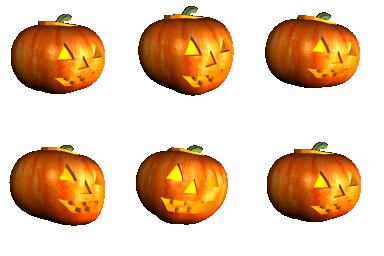
Q. What do you call two witches living together?
A. Broommates.
Q. What is a Mummie’s favourite type of music?
A. Wrap!
Q. Why didn’t the skeleton go to the halloween party?
A. Because he had no body to go with.
http://www.halloween.com/halloween-jokes-1.php
Visit the following websites and enjoy yourself:
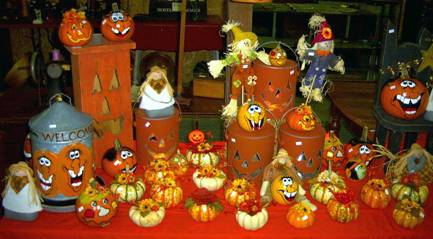
HALLOWEEN (All–Hallows–Evening) proviene de la tradición celto-irlandesa con la que se celebraba el final del verano y de la época de recolección, momento en que se recordaba a los seres queridos ya fallecidos (para nosotros el Día de Todos los Santos). En algunos países, para acercar esta fiesta a los niños, se adquirió la costumbre de que éstos fueran pidiendo caramelos por las casas.
Como ya es habitual en nuestro colegio, buscando acercar la cultura anglosajona a nuestros alumnos a un nivel no sólo educativo sino también lúdico, durante esta última semana de octubre celebraremos, un año más, la festividad de Halloween. Para darle un toque más divertido os proponemos que el viernes 29 los niños vengan vestidos de negro o azul marino para recordar la noche y/o naranja para recordar las calabazas. También pueden traer para tomar en el recreo una fruta de color naranja.
Este año haremos también un concurso de calabazas decoradas, por lo que os animamos a ayudar a vuestros hijos a decorar su propia calabaza y participar en un terrorífico concurso en el que se premiará la calabaza más divertida, la más elegante y la más aterradora. Deberán traerla al colegio cualquier día de esta semana. Y ya sabéis que si vaciáis la calabaza con lo que os sobre podéis hacer ¡¡una deliciosa tarta de Halloween!!
Pincha aquí para encontrar sabrosas recetas de dulces con calabaza
 Your heart is a muscle.
It works like a pump.
It sends blood around inside your body.
Blood takes good things to parts of your body.
It takes away waste.
 The heart is a muscle inside a person’s chest. Your heart is about the size of your fist. It pumps blood so that the blood moves to every part of the body. Blood is red and watery and helps keep people well. Blood keeps moving all through your body all the time.
Blood goes out of the heart in tubes called arteries (say ah-ter-reez). The blood takes oxygen and nutrients to all parts of the body and takes away waste. It goes back to the lungs through tubes called veins (say vanes). The lungs put air back into the blood, before it goes to the heart again to be pumped out through the arteries and round the body again.
Sections of the Heart
The human heart consists of four sections, called chambers. There are two on each side of the heart, two on top and two underneath. On top there is a left atrium and a right atrium (say ay-tree-um). The two together are called atria (ay-tree-uh). These fill with blood that is returning from the body and lungs. Underneath the atria are the left and right ventricles. They pump out the blood to go to the body and lungs. The left and right sides of the heart are separated by a thick wall of muscle called a septum.
 Pulse and Blood Pressure
Before each beat, the heart fills with blood. Then the muscle squeezes and pushes the blood out. Your heart does this constantly. You can feel your heart beating. It is called a pulse. A doctor or nurse feels your pulse on your wrist, but it can be felt at other places too. Your heart beats about 100 000 times each day.
Sometimes a doctor or nurse needs to check that a person’s heart is beating strongly and at the right speed. This is called blood pressure.
A machine measures the person’s blood pressure.
Blood Types
If a person is hurt and loses a lot of blood, they need more blood to be put inside their body. Extra blood is kept at a Blood Bank. People go there and nurses take some of their blood. The blood is kept in special bags for times when it is needed. There are different types of blood. Most people have the blood called A or O.
Amazing Facts
The heart beats around 3 billion times in the averages person’s life.
About 8 million blood cells die in the human body every second, and the same number are born each second.
Within a tiny droplet of blood, there are some 5 million red blood cells.
It takes about 20 seconds for a red blood cell to circle the whole body.
Red blood cells make approximately 250,000 round trips of the body before returning to the bone marrow, where they were born, to die.
Red blood cells may live for about 4 months circulating throughout the body, feeding the 60 trillion other body cell.

1. How can we damage joints?
2. How can we damage muscles?
3. How can we damage bones?
4. Can you name the minerals that are important for strong bones?
5. Which 3 types of food have bis of calcium?
6. Can you name 2 unhealthy habits that can damage our bones and muscles?
7. What shoud you do before doing sports?
8. What should you do after doing sports?
9. Name 2 sports that are right for your age. Give reasons.
10. Name 2 sports that is not right for your age. Give reasons.
I know that a few a you don’t have a proper English-English dictionary at home, even though you should...
Click here to find the exact definitions of words.
The movement of the heart and blood is called the cardiovascular (say car-dee-oh-vass-cue-luh) system of the human body.
The circulatory is a system of vessels that pass through your entire body. You may read about two types of circulatory systems in animals. There are open circulatory systems in primitive organisms where you will find a heart that pumps fluids through the creature, but no complete system of vessels. More advanced organisms, including you, have closed circulatory systems where the heart is connected to a complete system of vessels. The fluids of a closed circulatory system never leave the vessels.
How does a circulatory system help you? It is the transportation system for your body. The circulatory system carries chemicals to all points in your body. The fluids also carry waste products and dissolved gases for your cells.
Think of the chemical compounds as cars and the circulatory system as a network of freeways, main streets, and side streets. The cars can pass from one building to another using these streets in the same way that a compound might be created in the brain and sent to the kidneys.
The circulatory system touches every organ and system in your body. The system is connected to all of your body’s cells so that it can transport oxygen efficiently. When you breathe, the circulatory system carries oxygen to your cells and carries dissolved carbon dioxide back to the lungs.
Every cell that needs oxygen needs access to the fluids in your circulatory system. The circulatory system and its fluids are super important to your digestive system that has absorbed nutrients from your food. Guess what? Hormones created by your endocrine system are sent through the body by the circulatory system.
The core components of your circulatory system are the heart and vessels. You happen to have a four-chambered heart while other organisms may have one, two, or three chambers. The heart is the pump for the system. As blood is pumped from the heart, it passes through a system of arteries, arterioles, and then capillaries. The capillaries are the vessels that allow for most of the transfer of compounds and dissolved gases. Capillaries are very small and have thin walls to allow easier passage of compounds including nutrients, glucose, carbon dioxide, and waste products. After the capillaries, your blood passes through venules and veins. The veins lead the circulatory fluids back to the heart. That’s it, the system is complete (and closed).
Watch a video about the CARDIOVASCULAR SYSTEM.
1. Where do we have muscles?
2. Can you name 3 muscles in the trunk?
3. Can you name the 2 muscles in the upper arm?
4. What are the muscles ¡n our bottom called?
5. What are muscles Iike?
6. What do ligaments do?
7. What do tendons do?
8. How do muscles work: on their own or in pairs?
9. When one muscle in a pair contracts, what does the other muscle do?
10. What does a muscle do when it contracts?

Here you’ll find more information about the locomotor system.
You can read it, see a full diagram of a bone, muscles and joints, and even listen to it!!
1. What is the locomotor system made up of?
2. What 3 things does the skeleton do?
3. Can you name a small bone?
4. Can you name a flat bone?
5. What does the skull protect?
6. What 2 organs does the ribcage protect?
7. What does a joint do?
8. Can you name a joint?
9. Can you name 3 bones in the leg?
10. Can you name 3 bones in the arm?
Skeletal systems come in many forms. You have a skeleton inside of your body (endoskeleton) made up of bones. Insects and crustaceans have skeletal systems on the outside or their bodies (exoskeletons) that are made of hard plates.
 Organisms like starfish do not have bones or plates. They have skeletons made up of fluids inside of tubes within their bodies. The fluid skeletal systems are called hydrostatic. All animals that live outside of the water need some kind of skeletal system to support or protect them.
We already hinted at the purpose of a skeletal system. Protection and support are the two big reasons that organisms have skeletal systems. In your body, the skeleton works very closely with the muscular system to help you move. Without the bones of your skeleton, you would be a blob of water-filled tissues. The bones create a framework to which your muscles and organs can connect. Your skeleton also plays a role in protection, especially in your head. The bones of your skull protect your all-important brain. Your ribs protect most of your internal organs from impact as well. Other animals with exoskeletons receive obvious protection from their skeleton. Crabs and insects have hard shells made of chitin to protect their entire bodies.

Your skeletal system does not work alone. We already mentioned the interaction with your muscular system. Muscles connect to your skeleton and they contract and move the skeleton along. Your skeletal system is made up of cartilage and calcified bone that work together. They help the process of movement happen in a smoother manner. The calcified bones of your skeleton also work with the circulatory system. Marrow inside of your bones helps produce the cells inside of you blood. Both red blood cells and white blood cells are created in your bones.
Many advanced animals have muscular systems. You know you do. Did you know that your muscular system is made up of three different types of muscular tissue? You have smooth, cardiac, and voluntary muscle tissue in your body. Smooth muscle is muscle you rarely control such as the muscle in your intestinal tract. Cardiac muscle is very specific tissue found in your heart. Voluntary muscle is the muscle that helps you move. All of those tissues add up to a muscular system that is found through your body. There is more to the muscular system than the muscles that help you move.
The big purpose of the muscles found in your body is movement. We could be talking about the movement of your legs while you walk. We could be talking about the beating of your heart. We could also be talking about the contraction of a very small blood vessel in your brain.
You have no control over most of the muscular system. You do control the voluntary muscle in your arms, legs, neck, and torso. You have little or no control over the heart or smooth muscle. Those other muscles are under the control of the autonomic nervous system (ANS).
We just teased the fact that your muscular system is closely connected to the nervous system. That makes sense since you usually have to think before you can move. Even though thinking is not always involved, the neurons of the nervous system are connected to most of the cells in your muscular system. You have smooth muscles that line your digestive system and help move food through your intestines. Smooth muscle also surrounds your circulatory system and lymph system. Those muscle tissues are spread throughout your body and are even involved in controlling the temperature of your body.
The main parts of your voluntary muscular system include the muscles, and tendons. Tendons connect your muscles to your bone at insertion points.
When the muscle shortens, the bones are pulled closer together. Muscles called flexors force your joints to bend. Muscles called extensors cause your limbs to straighten. A bicep is a flexor and the triceps are extensors. You may have also heard of ligaments. They are batches of connective tissue that bind bones to each other. Muscles, tendons, and ligaments can been found working together in almost all of your joints.

Claudia, from 6ºC, has discovered this website full of games to improve your knowledge and your English.
Click on the following link to learn and have fun about different subjects, including English Language and Science.
1. Why are camels, dogs, whales, and humans all considered mammals?
2. Like all animals, mammals have certain adaptations that enable them to survive in their environment. For example, giraffes with long necks could reach food in high tree branches while short-necked giraffes could not. When the food on the ground was all gone, the short-necked giraffes died, but the long-necked giraffes survived for many generations. What are some human adaptations that help us live in our environment?
3. Most mammals give their young more protection and training than do other animals. Discuss how specific mammals take care of their offspring. What behaviors are unique to mammals?
4. Chimpanzees and humans are not only both mammals, they share many other characteristics. List some of the similarities between humans and chimpanzees. For example, we both use tools, and walk upright.
5. What characteristics distinguish humans from all other mammals? What unique traits make people “human”?

I’m so happy that we have more than 20.000 visitors since we have a counter!!!!!
Thank you all for making me feel that all the hard work is useful!!!!
THANK YOU!!!

 A system is a group of organs that work together and provide an organism with an advantage for survival. It is the most complex organization in your body and the final level of the progression from cells to tissues to organs and then systems. Systems work alone and with other systems to allow your body to maintain homeostasis. Homeostasis is a stable internal environment that allows you (and your cells) to survive.
While every one of your systems is needed to survive, your nervous system is the most important as you continue reading this page. Your eyes and brain are reading these words and remembering all of the information about systems. If you think about it, you are also using your muscular system to help move your eyes, pupils, and keep your head up.
Organs are a part of every system. Your heart is classified as an organ and it is a part of the circulatory system. Organs can work within several systems of your body. Many organs also have specific cells or tissues that have different functionality. Your kidneys are not only a part of your excretory system; they also have specific parts that serve the endocrine system.
You, and many advanced mammals, have similar organs and systems. However, there is a wide variety of organ types found throughout the animal kingdom. Some aquatic animals have organs that remove salts from salt water and an animal like a cow might have multiple stomachs in the digestive system.
 We just explained how organs could be a part of several systems. Similarly, systems rarely work alone. All of the systems in an organism are interconnected. A simple example is the connection between the circulatory and respiratory systems. As blood circulates through your body, it eventually needs fresh oxygen (O2) from the air. When the blood reaches the lungs, part of the respiratory system, the blood is re-oxygenated. Your stomach, part of the digestive system, constantly interacts with your endocrine system and spreads hormones throughout your body.