DIGESTING FOOD
 I chew my food to make it mushy.
 I swallow the mushy food.
 It gets more mushed up inside my stomach & guts.
 Some of the food helps my body grow.
 The last bit gets pushed out of my body.
Our body must digest (say die-jest) food we have eaten. When we chew, food is crushed up and mixed with saliva (spit) so it becomes mushy.
 We swallow the mush and it travels through the esophagus (say ee-sof-a-gus), a long tube that runs from the mouth, before it goes into the stomach. Inside the stomach there are juices that mix the food until it looks like thick soup.
Next, the food goes into a long tube all folded up inside the body. It is called the small intestine. Juices from the liver mush up the food even more, and good things from the food go into the blood, which takes them to parts of the body where they are needed.
The food then goes to the large intestine. Water from the food goes into the blood.
By now, the body has taken all the things it  needs from the food. What is left is waste that is not needed by the body. It gets stored at the end of the large intestine inside the rectum. The waste must leave or the body will get sick. Muscles push the waste out of the body through the anus, which is the opening in your bottom.
HOW LONG DOES IT TAKE FOR THE BODY TO DIGEST FOOD?
Food can be 3-4 hours in the stomach, then about 3 more hours as it moves through the intestine. It can stay in the the large intestine for up to 36 hours. So, depending on the type of food and the speed at which it moves, it can take about 40 hours or more.
EATING AND ELIMINATION!
This is our favorite system. We love to eat and we love to poop. For the rest of the page we will refer to pooping as elimination. It’s more technical that way. Anyway, your digestive system is all about getting food into your body, digesting the food, absorbing the nutrients you need, and elimination of the materials you don’t need (feces). All animals have one sort of digestive system or another. Why? Anything that eats another creature (heterotrophs) must have a way of bringing nutrients in and getting rid of what they don’t need.
WHAT DOES THIS SYSTEM DO?
What does the system do? We’re going to use you as the basis for our explanation of the digestive system. Let’s start with eating. You get hungry and you eat. Once you put the food in your mouth, you start to chew and begin a process of mechanical digestion that grinds food down into a pulp.
Your body also starts to release enzymes that start the process of chemical digestion and the breakdown of biological molecules. Most chemical digestion happens in the stomach. The food moves through your digestive system and is eventually broken down into compounds and nutrients that your small intestine can absorb into the blood stream. The material you don’t absorb continues into the large intestine where water is removed from the material and then whatever is left can be eliminated at your convenience. That’s a decent overview of the process.
INTERACTING WITH OTHER SYSTEMS
The digestive system works very closely with the circulatory system to get the absorbed nutrients distributed through your body. The circulatory system also carries chemical signals from your endocrine system that control the speed of digestion.
The digestive system also works in parallel with your excretory system (kidneys and urination). While the digestive system collects and removes undigested solids, the excretory system filters compounds from the blood stream and collects them in urine. They are closely connected in controlling the amount of water in your body.
MALNUTRITION
Nutrition is one of the most important ideas you can learn about. You can get hundreds of diseases if you don’t have a balanced diet. An extreme example of malnutrition is called Kwashiorkor that occurs when you don’t get enough protein in your diet. There are many disease related to missing individual vitamins and minerals including scurvy (vitamin C), beri beri (vitamin B1), or a goiter (iodine). The resulting goiter shows how the lack of one specific element can change the way your endocrine system works.
You probably learn about getting enough calcium in your diet. Your bones, tissues, and nervous system all need that calcium. Did you know that some people who don’t have enough calcium (Ca) in their diets replace the calcium in their bones with magnesium? It can happen because calcium and magnesium are so similar on an atomic level.
My Body: Digesting Food
I chew my food to make it mushy.
I swallow the mushy food.
It gets more mushed up inside my stomach & guts.
Some of the food helps my body grow.
The last bit gets pushed out of my body.
Our body must digest (say die-jest) food we have eaten. When we chew, food is crushed up and mixed with saliva (spit) so it becomes mushy.
We swallow the mush and it travels through the esophagus (say ee-sof-a-gus), a long tube that runs from the mouth, before it goes into the stomach. Inside the stomach there are juices that mix the food until it looks like thick soup.
Next, the food goes into a long tube all folded up inside the body. It is called the small intestine. Juices from the liver mush up the food even more, and good things from the food go into the blood, which takes them to parts of the body where they are needed.
The food then goes to the large intestine. Water from the food goes into the blood.
By now, the body has taken all the things it needs from the food. What is left is waste that is not needed by the body. It gets stored at the end of the large intestine inside the rectum. The waste must leave or the body will get sick. Muscles push the waste out of the body through the anus, which is the opening in your bottom.
How long does it take for the body to digest food?
Food can be 3-4 hours in the stomach, then about 3 more hours as it moves through the intestine. It can stay in the the large intestine for up to 36 hours. So, depending on the type of food and the speed at which it moves, it can take about 40 hours or more.
My Body: Digesting Food
I chew my food to make it mushy.
I swallow the mushy food.
It gets more mushed up inside my stomach & guts.
Some of the food helps my body grow.
The last bit gets pushed out of my body.
Our body must digest (say die-jest) food we have eaten. When we chew, food is crushed up and mixed with saliva (spit) so it becomes mushy.
We swallow the mush and it travels through the esophagus (say ee-sof-a-gus), a long tube that runs from the mouth, before it goes into the stomach. Inside the stomach there are juices that mix the food until it looks like thick soup.
Next, the food goes into a long tube all folded up inside the body. It is called the small intestine. Juices from the liver mush up the food even more, and good things from the food go into the blood, which takes them to parts of the body where they are needed.
The food then goes to the large intestine. Water from the food goes into the blood.
By now, the body has taken all the things it needs from the food. What is left is waste that is not needed by the body. It gets stored at the end of the large intestine inside the rectum. The waste must leave or the body will get sick. Muscles push the waste out of the body through the anus, which is the opening in your bottom.
How long does it take for the body to digest food?
Food can be 3-4 hours in the stomach, then about 3 more hours as it moves through the intestine. It can stay in the the large intestine for up to 36 hours. So, depending on the type of food and the speed at which it moves, it can take about 40 hours or more.


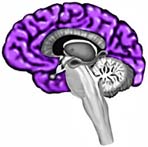 The biggest part of the brain is the cerebrum. The cerebrum makes up 85% of the brain’s weight, and it’s easy to see why. The cerebrum is the thinking part of the brain and it controls your voluntary muscles — the ones that move when you want them to. So you can’t dance — or kick a soccer ball — without your cerebrum.

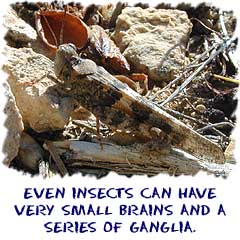
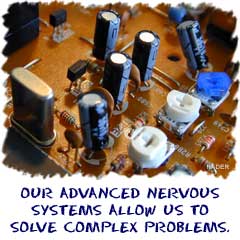 Since you’re reading this page, we figure you’ve got a nervous system. If you were an insect you would also have a nervous system, but it would be a lot simpler. Even animals that don’t think have simple nervous systems called nerve nets that help them move.
 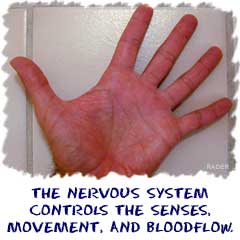 The nervous system also senses activity inside of your body. Most of the nervous system response inside of your body is not in your control. Your body automatically senses and reacts to stimulus. Think about eating your lunch. As you eat, your nervous system triggers the start of digestion and release of many hormones and enzymes throughout your body.
  The nervous system is made up of nervous tissues that are, in turn, made up of many types of neurons. There are billions of neurons connected throughout your body. These neurons are connected end to end and transmit electrical impulses from one point to another.

 Your respiratory system is all about exchanging gases with the environment. Some animals such as amphibians are able to exchange gases through their moist skin. Fish have gills while mammals, birds, and reptiles have lungs. Your respiratory system is made of your nose and mouth, a tube called the pharynx, another tube called the trachea, and your lungs. You have two lungs and the exchange of gases between the circulatory and respiratory systems happens in the lungs.
  We already mentioned the circulatory system. With gases like oxygen and carbon dioxide (CO2), other compounds can be brought into the body by the respiratory system. Smoke can clog the alveoli in your lungs. You can inhale viruses and bacteria that could get you sick. You can also take in larger chemical compounds that can poison your body. All of these compounds can enter your blood stream via your respiratory system.
 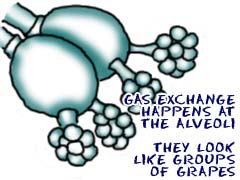 What can go wrong with your respiratory system? So many things can go wrong with this system. It is very vulnerable to both toxins and diseases. Some diseases such as pneumonia can cause your lungs to fill with fluid and you are no longer able to take in enough oxygen for your body.