Blogia

CLASS OF 2010-2011!!!

Puaaggg!!! Lice!!!!

Puaaggg!!! Lice!!!!

Scratch scratch. Scratch. Your head is feeling really itchy. Could it be lice?

If so, you're not alone. Every year, between 6 and 12 million people worldwide get head lice. Most of those millions are kids. Any kid who goes to school has probably already heard about lice. They can spread easily at schools, so if one kid gets them, the rest of the class might get them, too. What can you do? Let's find out.

What Are Lice?

Lice are very, very small insects. In fact, they are so tiny that you can barely see them! Each louse (the name for one of the lice) is brown and gray and only about the size of a sesame seed.

Lice are parasites (say: pah-ruh-sytes), which means that they live off other living things. Head lice need to be next to skin to survive - and the warmth of your skin is a perfect place for them to live. Lice eat tiny amounts of blood (much less than a mosquito does) for their nourishment and use their sticky little feet to hold on to hair. Gross!

When lice start living in hair, they also start to lay eggs, or nits. Lice can survive up to 30 days on a person's head and can lay eight eggs a day. Lice attach their nits to pieces of hair, close to the scalp. If you see a small, oval blob on a strand of hair, that's probably a nit. If these little eggs are yellow, tan, or brown, the lice haven't hatched yet. If the eggs are white or clear, the lice have hatched.

Although they don't hurt, lice sometimes can irritate the skin and make it itchy (especially at night). Too much scratching can lead to scalp infections.

Life Without Lice

Sure, lice aren't so nice, but there are things you can do to keep them away. To help prevent lice:

  • If your friend has lice, don't give the lice any chance to spread to you. Avoid putting your heads together or sharing stuff that could contain lice, such as hats or combs.
  • Don't try on hats that belong to other kids.
  • Never share a comb, brush, barrettes, or other hair accessories. Use your own, and don't lend them to anyone else.
  • Always use your own sleeping bag and pillow when sleeping away from home.

Sharing is usually a great idea - except when you're sharing lice!

10.- THE EYES

Which part of your body lets you read the back of a cereal box, check out a rainbow, and see a softball heading your way? Which part lets you cry when you’re sad and makes tears to protect itself? Which part has muscles that adjust to let you focus on things that are close up or far away? If you guessed the eye, you’re right!

Your eyes are at work from the moment you wake up to the moment you close them to go to sleep. They take in tons of information about the world around you — shapes, colors, movements, and more. Then they send the information to your brain for processing so the brain knows what’s going on outside of your body.

You can see that the eye’s pretty amazing. So, come on — let’s take a tour of its many parts.

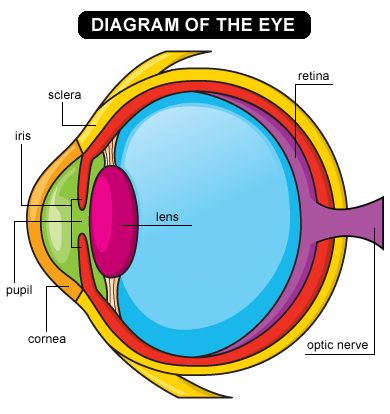
The Parts of the Eye

You can check out different parts of the eye by looking at your own eye in the mirror or by looking at (but not touching) a friend’s eye. Some of the eye’s parts are easy to see, so most friends will say OK. Most friends won’t say OK if you ask to see their liver!

                eye diagram web

More information

9.- SKIN AND HAIR

Quick! What’s the body’s biggest organ?

You might be surprised to find out it’s the skin, which you might not think of as an organ. No matter how you think of it, your skin is very important. It covers and protects everything inside your body. Without skin, people’s muscles, bones, and organs would be hanging out all over the place. Skin holds everything together. It also:

  • protects our bodies
  • helps keep our bodies at just the right temperature
  • allows us to have the sense of touch

Don’t Miss Your Epidermis

The skin is made up of three layers, each with its own important parts. The layer on the outside is called the epidermis (say: eh-pih-dur-mis). The epidermis is the part of your skin you can see.
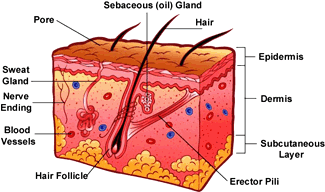
Skin diagram

Look down at your hands for a minute. Even though you can’t see anything happening, your epidermis is hard at work. At the bottom of the epidermis, new skin cells are forming.

When the cells are ready, they start moving toward the top of your epidermis. This trip takes about 2 weeks to a month. As newer cells continue to move up, older cells near the top die and rise to the surface of your skin. What you see on your hands (and everywhere else on your body) are really dead skin cells.

Dermis = Lots of Blood Vessels

Your dermis is also full of tiny blood vessels. These keep your skin cells healthy by bringing them the oxygen and nutrients they need and by taking away waste. These blood vessels are hard to see in kids, but you might get a better look if you check out your grandparents’ skin. As the dermis gets older, it gets thinner and easier to see through.

The Third Layer Is Subcutaneous Fat

The third and bottom layer of the skin is called the subcutaneous (say: sub-kyoo-tay-nee-us) layer. It is made mostly of fat and helps your body stay warm and absorb shocks, like if you bang into something or fall down. The subcutaneous layer also helps hold your skin to all the tissues underneath it.

This layer is where you’ll find the start of hair, too. Each hair on your body grows out of a tiny tube in the skin called a follicle (say: fah-lih-kul). Every follicle has its roots way down in the subcutaneous layer and continues up through the dermis.

You have hair follicles all over your body, except on your lips, the palms of your hands, and the soles of your feet. And you have more hair follicles in some places than in others — there are more than 100,000 follicles on your head alone!

Your hair follicles rely on your sebaceous glands to bring on the shine. Connected to each follicle in the dermis layer is a tiny sebaceous gland that releases sebum onto the hair. This lightly coats the hair with oil, giving it some shine and a little waterproofing.


When you think of your hair, you probably think of the hair on your head. But there’s hair on almost every part of your body. (Some places that don’t have hair include the lips, the palms of the hands, and the soles of the feet.)

Some of the hair on your body is easy to see, like your eyebrows and the hair on your head, arms, and legs. But other hair, like that on your cheek, is almost invisible.

Depending on where it is, hair has different jobs. The hair on your head keeps your head warm and provides a little cushioning for your skull. Eyelashes protect your eyes by decreasing the amount of light and dust that go into them, and eyebrows protect your eyes from sweat dripping down from your forehead.

Hair Comes From Where?

Whether hair is growing out of your head, arm, or ankle, it all rises out of the skin in the same way. It starts at the hair root, a place beneath the skin where cells band together to form keratin (the protein that hair is made of). The root is inside a follicle (say: fol-ih-kul), which is like a small tube in the skin.

As the hair begins to grow, it pushes up from the root and out of the follicle, through the skin where it can be seen. Tiny blood vessels at the base of every follicle feed the hair root to keep it growing. But once the hair is at the skin’s surface, the cells within the strand of hair aren’t alive anymore. The hair you see on every part of your body contains dead cells. That’s why it doesn’t cause pain when someone cuts your hair with scissors!

Nearly every hair follicle is attached to a sebaceous (say: sih-bay-shus) gland, which is sometimes called an oil gland. These sebaceous glands produce oil, which makes the hair shiny and a bit waterproof. Sometimes, like during puberty, these glands can pump out too much oil and a person’s hair may look greasy. Time for a shampoo!!

GEOGRAPHY

GEOGRAPHY

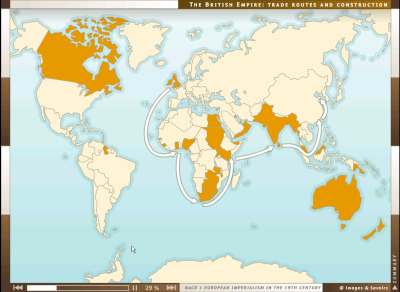
For those of you who want to keep on learning Geography.

Interactive maps

PIPPI LÅNGSTRUMP (Pipi Calzaslargas) 65th BIRTHDAY

PIPPI LÅNGSTRUMP (Pipi Calzaslargas) 65th BIRTHDAY

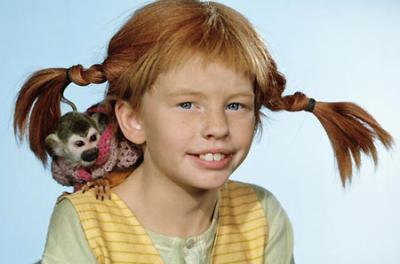
Pippi Långstrump is a fictional character in a series of children’s books by Swedish author Astrid Lindgren, and adapted into multiple films and television series. Pippi was named by Lindgren’s then nine-year-old daughter, Karin, who requested a get-well story from her mother one day when she was home sick from school.

Nine-year-old Pippi is unconventional, assertive, and has superhuman strength, being able to lift her horse one-handed without difficulty. She frequently mocks and dupes adults she encounters, an attitude likely to appeal to young readers; however, Pippi usually reserves her worst behavior for the most pompous and condescending of adults. She turns white around the nose whenever she gets angry, and considering her superhuman strength, this fortunately happens very rarely. Pippi’s anger is reserved for the most extreme cases, such as when a man ill-treats his horse. And like Peter Pan, Pippi does not want to grow up.

After an initial rejection from Bonnier Publishers in 1944, Lindgren’s manuscript was accepted for publication by the Swedish publisher Rabén and Sjögren. The first three Pippi chapter books were published from 1945 to 1948, with an additional series of six books published in 1969–1975. Two final stories were printed in 1979 and 2000. The books have been translated into 64 languages.

In 1968, the Swedish-German T.V. series that narrated the adventures of the redhead girl, started to be recorded. A movie had already been done 20 years earlier, in 1949 but Astrid Lindgren, the creator of the character, did not like it and she committed herself with the new project, and together with the director Olle Hellbom they would select Inger Nilsson for the role of her life.


It brings me so many good memories!!!

25th November: THANKSGIVING DAY

`

The Turkey

Thanksgiving Day celebration will be incomplete without the legendary turykey. The Pilgrims used to call any wild fowl, turkey. The turkey is usually the main course of most household during this celebration. It is a customary dinner which serves as a reminder of the four wild turkeys that were served at the first Thanksgiving feast.

The Cornucopia

The Cornucopia s a symbol of nature’s productivity. It is the "horn of plenty" and is the most common symbol of a harvest festival. It is a horn-shaped container or basket that is filled with the abundance of a harvest. The traditional cornucopia was a curved goat’s horn.

According to ancient Greek mythology, it was one of the horns of a goat called Amalthaea. The horn could produce ambrosia and nectar which was the food and drink of the gods. This goat supposedly nursed the god Zeus when he was a baby. Zeus later set the goat’s image in the sky known to us today as the constellation Capricorn, to show his gratitude.

However, according to Roman mythology, the cornucopia was the horn of Achelous, the river god. The horn was broken off in a fight with Hercules. It was believed that Achelous came in the form of a bull. The water nymphs then filled the horn with flowers and fruit to offer it to the goddess of plenty, called Copia.

The Pumpkin

Another symbol of the modern Thanksgiving dinner is the pumpkin pie. The pumpkin is one of the most important symbols of the harvest festival and is an American favorite.

Cranberries

Cranberries are a kind of berry. Its name originated from crane berry because of its pink blossoms and drooping head which reminded the Pilgrims of the crane. The Pilgrims found out how to sweeten the bitter cranberries with maple sugar. The cranberry sauce was and is still used as a compabion of turkey during Thanksgiving dinner.

Beans

Native Americans taught the Pilgrims to grow beans next to cornstalks. The was so that tbe beans could use the cornstalks as their pole as they grow, hence American beans are also known as Pole beans. Beans are therefore a special symbol of thanksgiving feast.

THANKSGIVING ACTIVITIES


FUTBOL PARA APRENDER

Pedro, vuestro profesor de Educación Física quiere que tengáis esta información que seguro que a más de uno os resulta útil:

Les damos a conocer el material GRATUITO "Fútbol para aprender" con el que pretendemos motivar a los alumnos a partir de 10 años de edad utilizando la temática deportiva y concretamente futbolística. Hemos creado un material en el que dibujamos los goles del partido de la semana de la liga de fútbol española y asociamos un reto matemático al que instamos a responder a los niños y niñas (a partir de 10 años). Para recibirlo semanalmente tan sólo hace falta solicitarlo en la página web por parte de los propios alumnos, los profesores o educadores o los padres en la siguiente dirección web:http://www.areaeducativa.net/apoyo 


PRESENT PERFECT vs PAST SIMPLE

The Present Perfect is used when an action happened in the past and there is a connection to the present. There’s no exact time expressed when the action happened.

Key words: already, just, yet, ever, never, for, since, so far, up to now, not yet, lately

PAST
PRESENT


Nick has gone on holiday.
result
He is not in the office.


Have you ever been to Italy?
connection with the present
Do you know Italy? No, I have never been there.


He has already met Sue.
connection with the present
He likes her.


He has just eaten something bad.

connection with the present
He feels bad now.


He has been in Spain for ten days.
connection with the present
He is still there.


He has been in Spain since Friday.
connection with the present

He is still there.


EXERCISE 1


EXERCISE 2


EXERCISE 3


EXERCISE 4


EXERCISE 5


EXERCISE 6

134th Anniversary of Birth of Manuel de Falla


Manuel de Falla y Matheu (November 23, 1876 – November 14, 1946) was a Spanish composer of classical music. With Isaac Albéniz and Enrique Granados he is one of Spain’s most important musicians of the first half of the 20th century.

EL ATLETA MISTERIOSO

Poned a prueba vuestras dotes de detectives y siguiendo las pistas que a continuación os doy, descubrid el nombre del atleta misterioso. Quien lo consiga obtendrá una recompensa, ¿un viaje a Canarias? ¿un premio de 100.000 euros? ¿una cita con la chica o el chico de tus sueños?            Chi lo sa?

… Animo y a investigar Sherlocks …

1- Nací el mismo año que personalidades del mundo de la cultura y el deporte como: Eduardo Noriega (actor), Iker Jiménez (periodista), Virginia Ruano (tenista) y Roberto Carlo (futbolista), entre otros. ¿Qué año fue éste?

2- A los 15 años de edad debuté en la 1ª división de un deporte en el que han destacado deportistas como Juan Antonio San Epifanio, Fernando Romay y Juan Manuel López Iturriaga. ¿Qué deporte es ese?

3- A la edad de 19 años participé con la Selección Española de baloncesto en unos Juegos Olímpicos donde conseguí un merecidísimo 5º puesto. ¿Qué Juegos Olímpicos eran esos?

4- Después de las Olimpiadas de Barcelona 92, dí el salto a una modalidad  deportiva, en la que destacan figuras como Usain Bolt, Yelena Isinbayeva o Arturo Casado, entre otros. ¿De qué deporte estamos hablando?

5- He destacado en diferentes modalidades atléticas en las que las que se utilizan diferentes elementos: saltómetros, listones, y tablas de batida. ¿Cuáles son esas modalidades?

6- He sido 14 veces campeona absoluta de dos de las modalidades que antes descubristeis, y de las que han sido campeones olímpicos en Sidney 2000 Yelena Yelesina y Tereza Marinova. ¿Cuáles son estas modalidades?

7- Actualmente soy la Directora General de Deportes de la Comunidad de Madrid.

Reviewing: CIRCULATION

Click on these links to see the animations that would help you studying about circulation.

Blood system

The heart beat

Heart labelling


One day like today...


18th November, 1928: Mickey Mouse appears for the first time in Steamboat Willie. It was the first successful sound-synchronized animated cartoon film produced by Walt Disney and premiered at the Colony Theater in NYC (New York City). 


THE SECOND CONDITIONAL

IF + SUBJECT + PAST SIMPLE , SUBJECT + WOULD + INFINITIVE

SUBJECT + WOULD + INFINITIVE + IF + SUBJECT + PAST S.

The Second Conditional is used to talk about ’impossible’ situations.

  • If we were in London today, we would be able to go to the concert in Hyde Park.
  • If I had millions dollars, I’d give a lot to charity.
  • If there were no hungry people in this world, it would be a much better place.
  • If everyone had clean water to drink, there would be a lot less disease

Note that after I / he/ she /it we often use the subjunctive form 'were' and not 'was'.

  • If she were happy in her job, she wouldn’t be looking for another one.
  • If I lived in Japan, I’d have sushi every day.
  • If they were to enter our market, we’d have big problems.

Note the form 'If I were you' which is often used to give advice.

  • If I were you, I’d look for a new place to live.
  • If I were you, I’d go back to school and get more qualifications.

The Second Conditional is also used to talk about 'unlikely' situations.

  • If I went to China, I’d visit the Great Wall.
  • If I was the President, I’d reduce taxes.
  • If you were in my position, you’d understand.

Note that the 'If clause' can contain the past simple or the past continuous.

  • If I was still working in Brighton, I would commute by train.
  • If she were coming, she would be here by now.
  • If they were thinking of selling, I would want to buy.

Note that the main clause can contain 'would' 'could' or 'might'.

  • If I had the chance to do it again, I would do it differently.
  • If we met up for lunch, we could go to that new restaurant.
  • If I spoke to him directly, I might be able to persuade him.

Also note that sometimes the 'if clause' is implied rather than spoken.

  • What would I do without you? ("if you weren’t here")
  • Where would I get one at this time of night? ("if I wanted one")
  • He wouldn’t agree. ("if I asked him")

exercise 1

exercise 2

exercise 3

exercise 4

exercise 5

exercise 6

WOW!!!!

30.000 visitors!!!


KET & PET for Schools: Computer-based Practice Tests

These on-line tests show the types of questions that will appear in the live exam.

Please, follow the instructions and do this practice at home to get use to the exam we are doing in May.

CB KET for Schools

KET for Schools Reading & Writing Practice Test (9.47Mb) | KET for Schools Reading & Writing Practice Test Answer Key (14Kb)

KET for Schools Listening Practice Test (23.75Mb) | KET for Schools Listening Practice Test Answer Key (9Kb)

CB PET for Schools

PET for Schools Reading & Writing Practice Test (11.12Mb) | PET for Schools Reading & Writing Practice Test Answer Key (14Kb)

PET for Schools Listening Practice Test (24.72Mb) | PET for Schools Listening Practice Test Answer Key (8Kb)

System requirements

Pentium III 800 Mhz or equivalent
Minimum 128MB RAM
Windows 2000 Professional or above
CD-ROM drive, minimum 24x speed
High colour 32 bit display
Screen resolution of 1024x768 or higher
Sound card and speakers or headphones
Mouse or other pointing device
Flash Player version 8 or above

1. Save the attached file to your hard drive (C: drive on most PCs).
2. Double click on the file to run the test.
3. At the log in screen, click ‘Submit’. No candidate number or password are required.
4. Repeat the above process for each individual PC on which you wish to run the Practice Test.


Play and check your knowledge

Play and check your knowledge

HUMAN BODY GAMES


Ready for more?

Do you want to keep on trying?? Answer the following quizzes then:

THE CARDIOVASCULAR SYSTEM

THE RESPIRATORY SYSTEM

THE URINARY SYSTEM

THE LOCOMOTOR SYSTEM

THE DIGESTIVE SYSTEM

THE NERVOUS SYSTEM


A Glossary of Medical Words

Symptoms, inhaler, tonsillectomy - what do all those medical words mean?

Check out this virtual glossary for lots of easy-to-read definitions.

Once upon a time... THE BRAIN