
(Click on the image)

(Click on the image)
We’ve though this video was very appropriate as a farewell song.
We already miss you a lot!!
Take good care of yourself!!

The word Christmas comes from the Old English ‘Cristes Mæsse’ ~ meaning the ‘mass of Christ’ as it commemorates the birth of Jesus Christ. The first official celebrations took place in 336 after Emperor Constantine had declared Christianity the empire’s favoured religion. The festivals often begin at the beginning of December and continue until 6th January or Epiphany with the arrival of the Magi (Three Wise Men or Three Kings).
In the weeks leading up to Christmas, many people decorate their houses. They send Christmas cards and children write a letter for Father Christmas letting him know which presents they would like. It is typical to have a Christmas Tree and many children have advent calendars, which they open each day until the 24th: Christmas Eve. That night, Father Christmas uses his reindeer-drawn sleigh to visit each house and deliver the presents down the chimney. Some children hang stockings by the fireplace or at the end of the bed but often Father Christmas leaves the presents under the Christmas tree.
On Christmas Day, people open their presents. Families get together to eat. Traditionally, they eat roast turkey followed by Christmas pudding. They pull crackers, which open with a bang and contain a joke, a paper crown and a small present.
The day after Christmas is Boxing Day.This word comes from a custom from the Middle Ages: churches would open boxes in which people had placed gifts of money and distribute the contents to poor people in the neighbourhood.
And now something as sweet as a peaceful Christmas time...
Christmas is associated with giving, so why not make some truffles which they can use as gifts??

You will need:
• 500g sponge cake
• 25g drinking chocolate (powder)
• 50g ground almonds
• orange juice
• vermicelli or more drinking chocolate
• mixing bowl
• fork
• greaseproof paper
Instructions:
1. Put the sponge cake into the mixing bowl and crumble it. You can use the fork or your fingers.
2. Add the drinking chocolate and ground almonds. Mix together.
3. Add the orange juice little by little, mixing until you have the right consistency (firm but malleable – similar to play-doh). Ideally (but not essentially), cool the mixture at this stage.
4. Get a square of greaseproof paper and a portion of the mix. Roll the mixture into bite-sized balls.
5. Roll the truffle in the vermicelli or drinking chocolate.
6. Enjoy eating them and sharing them with your friends.
Note: Remember you can only work in the kitchen when there is an adult nearby.
Why don't we sing last year's song too??
Here you have a karaoke version of the "Lemmon Tree" for you to remember the music and the lyrics.

This is my selection of interesting websites for this season. They are all related to Christmas and offer extra ideas, songs, crafts, and many more resources. Happy surfing!
Kiddyhouse: Christmas Activities
All Things Christmas: Christmas Traditions
¿Lo quieres ver en español???
¡Está bien...!! pincha en la reproducción humana.
The sperm swims up the vagina [vaj-eye-na], through the cervix [sir-vix], into the uterus [you-ter-us] and then into the fallopian [fal-o-pe-an] tubes of the female. These sperm are looking for an ovum (or egg) to fertilise.

This fertilised ovum immediately divides into two cells, these cells then divide again and again over the next couple of days as the cluster of cells makes its way to the uterus (womb). Here it is planted in the lining of the uterus and continues dividing its cells to make billions of new cells.
The amazing thing is that each one of these cells contains the same set of chromosomes or ’plans’ that were created at fertilisation!
Over 9 months, these cells will grow into a new person - a baby.
| Doctors have different names for this developing baby. | |
 | 1 day - ’zygote’ |
 | 1 month - ’embryo’ |
 | 3rd month to birth - ’foetus’ [feet-us] (also sometimes spelt ’fetus’) |
When your dad’s sperm and mum’s egg [ovum] got together, they each brought a set of ’plans’ for what the new baby would be like.
 | When the ovum was fertilised and became your first cells, these ’plans’ or genes helped to decide lots of things about you, eg. boy or girl, colour of skin, eyes, hair, etc. |
| Genes are made of DNA (’de-ox-y-ri-bo-nu-cle-ic acid’, if you want the full name). | |
| If you could see your genes they would look like beads on a necklace of DNA. These strands are called ’chromosomes’. |
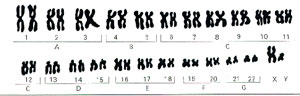
Usually each cell in a human body has 46 chromosomes.
That first single cell has 23 chromosomes from mum and 23 from dad, which is why you might look like mum or dad [or grandparents] and have similar traits, eg. you and dad may have pointy ears, or you and mum can both wiggle your noses! The chromosomes in a male are slightly different to those in a female. This is a picture of chromosomes in a male. |
 |
Remember, any one sperm can only fertilise one ovum, so if 2 ova (eggs) leave the ovaries at the same time and are both fertilised then ’non-identical’ twins are born. They may look alike or they may not, just like any brothers or sisters.
If an ovum splits after it has been fertilised, then you get identical twins because they have the same set of genes.
It is called a multiple birth if two or more babies are born at the same birth. Do you know what we call a set of three babies who are born at the same time?
What sex a baby will be is decided when the egg and sperm unite.
Each egg and each sperm have one sex chromosome.
There are two kinds of sex chromosomes - X and Y. Can you see why they are called x and y chromosomes?
Eggs carry only an X and sperm carry either an X or a Y
X+X means the cell will develop into a baby girl.
X+Y means that it will develop into a boy.
| Once you are born, you will grow up into a unique human being - there’s no-one else like you in the world. Even identical twins are not exact copies of each other - they each have their own personalities. | 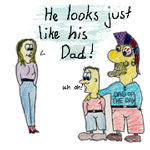 |
| You may look a bit like someone in your family, but there is only one of you! | |
| You are a completely unique and wonderful person. | |
The place where the embryo plants itself is inside the uterus. The baby starts to grow, and other tissue grows into a placenta [say plas-ent-a].
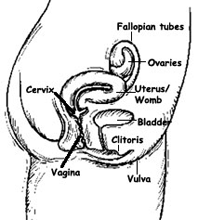 During pregnancy (the time when the baby is growing in mum’s uterus), the placenta provides oxygen from the air that mum breathes, and nutrients [say new-tree-ents] from the food she eats.
Some of the nutrients from what mum eats or drinks, and oxygen from the air she breathes, goes through the umbilical cord to the foetus. Any waste from the growing baby goes back through the cord into the mother’s bloodstream and passes out of her body.
The umbilical cord is a soft ’bendy’ tube from the placenta to the navel [or tummy button] of the foetus.
There is a sac (like a bag of thin skin) filled with fluid protecting the skin of the developing baby. The baby can move around safely inside the mother for 9 months until he or she is ready to be born into our world.
When sperm are ejaculated [say e-jak-u-lay-ted] from the penis during sexual intercourse, they swim up the vagina [vaj-eye-na], through the cervix [sir-vix], into the uterus [you-ter-us] and then into the fallopian [fal-o-pe-an] tubes of the female. These sperm are looking for an ovum (or egg) to fertilise. 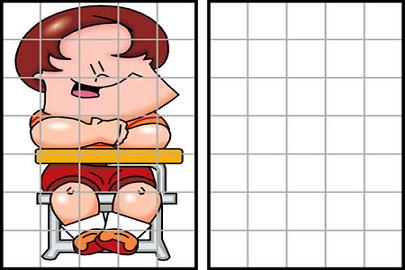
Do you want to test your knowledge of the senses and answer a few questions about all of them?
Here you have a few funny quizzes to test how clever you are.
Good luck!!
Once again, our show is going to be the best one.
Learn the lyrics, practice the song and get ready to be the stars in the stage!!! 



1. What 2 things protect the nose from dust?
2. Where does a smell go into the nose?
3. What does the olfactory nerve do?
4. What are taste buds for?
5. What are the 4 basic flavours?
6. Can you name something sour?
7. Can you name something bitter?
8. Which parts of our skin are the most sensitive?
9. Can you name 2 different textures our skin can identify?
10. What else can our skin identify?
11. Can you give 2 ideas about how to look after your eyes?
12. Can you give 2 ideas about how to look after your ears?
13. Can you give 2 ideas about how to look after your nose?
14. Can you give 2 ideas about how to look after your tongue?
15. Can you give 2 ideas about how to look after your skin?
You bite into an apple and then try to start talking to your friend about yesterday’s math homework. Suddenly something feels funny — one of your baby teeth has fallen out! It’s been loose forever, and now there it is, right in your hand. And you have an empty space in your mouth big enough to poke a drinking straw through.
Before you put that tooth under your pillow, did you know that there is much more to that tooth than meets the eye? A single tooth has many different parts that make it work. And teeth play an important role in your daily life. They not only let you eat stuff like apples, they also help you talk. So let’s talk teeth!
Unlike your heart or brain, your teeth weren’t ready to work from the day you were born. Although babies have the beginnings of their first teeth even before they are born, teeth don’t become visible until babies are about 6 to 12 months old.
After that first tooth breaks through, more and more teeth begin to appear. Most kids have their first set of teeth by the time they are 3 years old. These are called the primary or baby teeth, and there are 20 in all. When a child gets to age 5 or 6, these teeth start falling out, one by one.
A primary tooth falls out because it is being pushed out of the way by the permanent tooth that is behind it. Slowly, the permanent teeth grow in and take the place of the primary teeth. By about age 12 or 13, most kids have lost all of their baby teeth and have a full set of permanent teeth.
Let’s take a tour of your teeth. Look in the mirror at your own teeth or check out a friend’s smile. The part of the tooth you can see, which is not covered by the gum (your gums are the pink, fleshy part), is called the crown. The crown of each tooth is covered with enamel (say: ih-nam-ul), which is very hard and often shiny. Enamel is a very tough substance and it acts as a tooth’s personal bodyguard. Enamel works as a barrier, protecting the inside parts of the tooth.
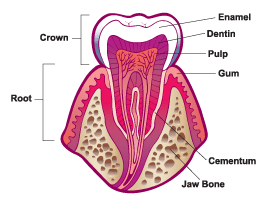 If you were able to peel away the enamel, you would find dentin (say: den-tin). Dentin makes up the largest part of the tooth. Although it is not as tough as enamel, it is also very hard.
Dentin protects the innermost part of the tooth, called the pulp. The pulp is where each tooth’s nerve endings and blood supply are found. When you eat hot soup, bite into a super-cold scoop of ice cream, fall and hurt a tooth, or get a cavity, it’s your pulp that hurts. The nerve endings inside the pulp send messages to the brain about what’s going on ("That ice cream is too cold!"). The pulp also contains the tooth’s blood vessels, which feed the tooth and keep it alive and healthy.
The pulp goes all the way down into the root of the tooth, which is under the gum. Cementum (say: sih-men-tum) makes up the root of the tooth, which is anchored to the jawbone.
There are 28 permanent teeth in all — eight more than the original set of baby teeth. Between the ages of 17 and 21, four more teeth called wisdom teeth usually grow in at the back of the mouth. They complete the adult set of 32 teeth.
You’ve probably noticed that you have different types of permanent teeth in your mouth. Each one has its own function.
Your two front teeth and the teeth on either side of them are incisors (say: in-sy-zurs). There are four on the top and four on bottom.
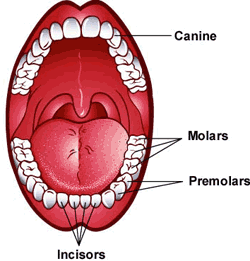 Incisors are shaped like tiny chisels, with flat ends that are somewhat sharp. These teeth are used for cutting and chopping food. Think back to that apple you ate: You used your incisors to crunch into the skin of the apple.
The pointy teeth beside your incisors are called canine (say: kay-nine) teeth. There are four of them, two on top and two on bottom. Because these teeth are pointy and also sharp, they help tear food.
Next to your canine teeth are your premolars (say: pree-mo-lurs), which are also called bicuspid teeth. You have eight premolars in all, four on top and four on the bottom. You’ll need to open a bit wider to see these teeth, but when you do, you’ll notice that their shape is completely different from both incisors and canines. Premolars are bigger, stronger, and have ridges, which make them perfect for crushing and grinding food.
If you open your mouth really wide, you’ll see your molars (say: mo-lurs). You have eight of these, four on the top and four on the bottom. Sometimes these are called your 6-year molars and your 12-year molars because that is around the time when they come in.
Marta y Gerardo me han pedido que os recuerde que le echéis un vistazo a esta canción que estáis practicando en clase para el festival de Navidad.
¡¡Ánimo y buena suerte!!
1. What 4 things do we use our eyes to identify?
2. What do we use our ears to identify?
3. What are the 3 parts of the ear?
4. What 4 things protect the eye from dust?
5. What protects the ear from dust?
6. Can you draw an eye and label the lens and the retina?
7. What do we need to be able to see?
8. What does the optic nerve do?
9. What do the small bones in the middle ear do?
10. Which nerve carries the messages about sound from the ear to the brain?


Click on the image to learn what a booger is and to do a quiz about boogers and snot.
So disgusting!!!!
A big batch of cookies coming out of the oven. Your gym bag full of dirty clothes. How do you smell these smells and thousands more? Its your nose, of course.
Your nose lets you smell and its a big part of why you are able to taste things. The nose is also the main gate to the respiratory system, your bodys system for breathing. Lets be nosy and find out some more about the nose.
The nose has two holes called nostrils. The nostrils and the nasal passages are separated by a wall called the septum (say: sep-tum). Deep inside your nose, close to your skull, your septum is made of very thin pieces of bone.
Closer to the tip of your nose, the septum is made of cartilage (say: kar-tel-ij), which is flexible material thats firmer than skin or muscle. Its not as hard as bone, and if you push on the tip of your nose, you can feel how wiggly it is.
Behind your nose, in the middle of your face, is a space called the nasal cavity. It connects with the back of the throat. The nasal cavity is separated from the inside of your mouth by the palate (roof of your mouth).
When you inhale air through your nostrils, the air enters the nasal passages and travels into your nasal cavity. The air then passes down the back of your throat into the trachea (say: tray-kee-uh), or windpipe, on its way to the lungs.
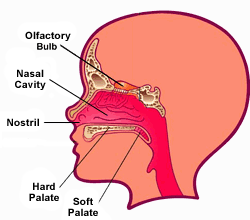 Your nose is also a two-way street. When you exhale the old air from your lungs, the nose is the main way for the air to leave your body. But your nose is more than a passageway for air. The nose also warms, moistens, and filters the air before it goes to the lungs.
1. How many senses do we have?
2. What is the sense organ of sight?
3. What is the sense organ of hearing?
4. What is the sense organ of smell?
5. What is the sense organ of touch?
6. What is the sense organ of taste?
7. What makes up the nervous system?
8. What do the sense organs do?
9. What do the nerves do?
10. What does the brain do?
Did you hear something? Maybe the sound you heard was as quiet as your cat licking her paws. Or maybe it was loud, like a siren going by. Sounds are everywhere, and you have two cool parts on your body that let you hear them all: your ears!
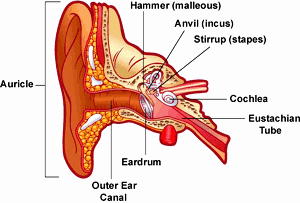 Your ears are in charge of collecting sounds, processing them, and sending sound signals to your brain. And that’s not all — your ears also help you keep your balance. So if you bend over to pick up your cat, you won’t fall down — or even worse — fall on your cat. Meow!
The ear is made up of three different sections: the outer ear, the middle ear, and the inner ear. These parts all work together so you can hear and process sounds.
The outer ear is called the pinna or auricle (say: or-ih-kul). This is the part of the ear that people can see. It’s what people pierce to wear earrings and what your friend whispers into when it’s time for a secret. The main job of the outer ear is to collect sounds, whether they’re your friend’s whispers or a barking dog.
The outer ear also includes the ear canal, where wax is produced. Earwax is that gunky stuff that protects the canal. Earwax contains chemicals that fight off infections that could hurt the skin inside the ear canal. It also collects dirt to help keep the ear canal clean. So earwax isn’t just gross. It’s gross and useful.
More information.
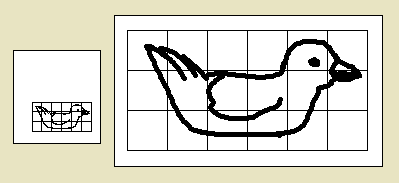
A veces tenemos la necesidad de hacer dibujos grandes o de copiar dibujos. por ejemplo para carteles, decoraciones, etc. Puesto que no es fácil diseñar directamente un dibujo muy grande, es preferible ampliar un dibujo pequeño. Podemos hacerlo de la manera siguiente:
Con regla, dibujamos encima del dibujo pequeño (original) una red de cuadrículas de, por ejemplo, 1 cm. En la hoja grande dibujamos el mismo número de cuadrículas, pero más grande según la escala de ampliación (por ejemplo, si queremos que el dibujo sea cuatro veces más grande, entonces las cuadrículas serán de 4 cm). Ahora solo tenemos que copiar el contenido de cada cuadrícula.
Good luck!!!