
Natural and Social Science
2.- MAMMALS
INTRODUCING THE MAMMALS!
You are a mammal. Your pet dogs and cats are mammals. An elephant is a mammal and so is a whale. When you learn about animals, the first you learn about are probably mammals. Not all mammals are made the same way. Most of the mammals you see will be placental. If you are in Australia you will see a lot of marsupials. Monotremes are tough to find. There aren’t many of those left in the world.
MAMMALS WITH EGGS
Monotremes were the first mammals. How do scientists know? They actually lay eggs. Monotremes are more closely related to reptiles than any other mammal. They have not yet evolved a way to have their babies live. Examples of monotremes are a duck-billed platypus and the spiny anteater.
MAMMALS WITH POUCHES
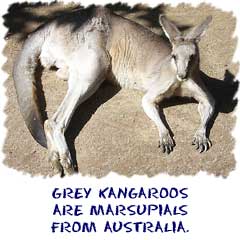
There are many more marsupials than monotremes. Kangaroos, koalas, bandicoots, and possums. You’ll find a lot of them in Australia. Australia is an island continent. Because of its isolation, placental mammals didn’t take hold in their ecosystems. Australia is like a mammalian time capsule. Marsupials are special mammals that give birth to their young live, but the babies mature in pouches. While they are in the pouch they suckle on the mother’s milk for nourishment.
LIKE YOU AND ME
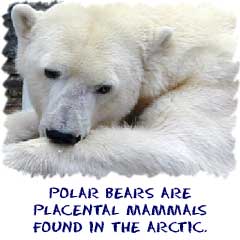
Placental mammals are the dominant form of mammal on the planet. Placental mammals deliver their young live and ready for action. Although the babies might still need some work, much of the basic development is done inside of the female’s placenta. When the baby is born, it still needs some raising and education. Mammalian mothers will usually stick around and help in that learning process. There are no pouches. The baby must walk or be carried.
Placental mammals are everywhere, even in the oceans. A group called cetaceans includes dolphins and whales. They are mammals that evolved and returned to the ocean. They still breathe air and even have tiny hairs like other mammals, but they live their whole lives in the water.
VERTEBRATES
While there aren’t that many species of vertebrates, we know you can name dozens of them. There are about 57,000 known species and the subphylum includes fish, amphibians, reptiles, birds, and mammals. There may be a greater number of invertebrate species across the planet, but the vertebrates are the most intelligent and advanced.
What do all of the vertebrate species have in common? They all have a skull and backbone with small bones called vertebrae. While you might not think much of some of your classmates, vertebrates are the most intelligent creatures on Earth. The skull and backbone are designed to protect our advanced nervous systems. The bones could be made of cartilage or calcified bone. Many fish have cartilage for their skeletons while mammals and reptiles have harder bones. Birds have similar bone composition to mammals, but they are hollow and lighter. The lighter bones help them fly.
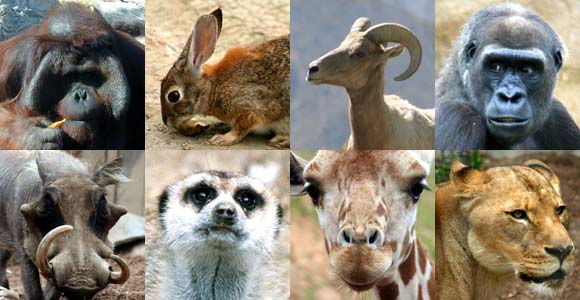
The most advanced vertebrates on Earth are mammals. The class Mammalia includes over 5,000 species that include animals from the platypus to kangaroos to humans. As you can guess from our short list, living mammals come from one of three groups. There are egg-laying mammals, mammals that have pouches to raise their young, and mammals that have placentas. These placental mammals have their young develop inside their bodies before they give birth. Humans are placental mammals.
Even though mammals have a few thousand living species, many more have become extinct. The first mammals appeared in fossils around 250 million years ago. They eventually developed many unique characteristics including control over their body temperature (homeotherms), hair, and seven cervical vertebrae in their necks.
Since mammals can control their body temperature, they can be found across the entire planet. You might find small mice in the hottest deserts and polar bears in the arctic cold. There are also flying mammals that live in trees and caves. There are even groups of mammals that have returned to the oceans of the world. They have developed characteristics that allow them to hold their breath for long periods and fins that make them strong swimmers. Never forget that they still have lungs and always return to the surface for a quick breath of air.
What are genes? What are chromosomes?
Genes
Everything that is alive has genes that determine what kind of creature the living being is. Genes are tiny strings of chemicals that are the microscopic building blocks of life. Genes are, in essence, instruction manuals for each life form.
Genes determine if a living being will be a plant or an animal, and what type of plant or animal the life form will be, down to what color it is and what kind of skin, fur or feathers are on its body. Genes also determine the individual, unique characteristics a living thing has, as well as the personality traits it will possess.
Genes are combinations of four different chemicals called nucleotide bases. The four nucleotides are called adenine, cytosine, guanine and thymine. Scientists simplify these into four initials, A,C, G and T, when they discuss genetic code. The different characteristics of a living thing are determined by the specific combinations of these four chemicals.
Chromosomes
Chromosomes are long strings of gene codes. Some of these coding strings consist of thousands, or hundreds of thousands, of individual genes, all strung together into a string of DNA. Human beings have 23 pairs of chromosomes, but some animals have more. A donkey actually has more pairs of chromosomes than a human being, with a total of 31.
Gene expression refers to how your genetic makeup shows through in your health, personality or character traits. For example, if you have blue eyes, your eye color is the gene expression of that specific genetic code. You might have a particular medical condition because of particular genes, and that medical condition is a result of gene expression.
Cell Division
Your body is composed of more than a billion cells. Cells are continually dying, and new cells are continually being formed. An identical copy of your hereditary material is found in the nucleus of each and every somatic cell. A somatic cell is any cell in the body except for the reproductive cells in the reproductive system.
This genetic blueprint is organized into 46 chapters or parts known as chromosomes. It is estimated that, on average, each chromosome contains between one and two thousand genes. A gene contains the information for making a single protein or RNA product.
Every time a cell divides, each chromosome must be carefully replicated (copied) and then distributed to assure that each daughter cell gets a complete and accurate set of information. Thus, nuclear division includes successive processes of chromosome replication, separation, and distribution (Figure 1).
Figure 1: Chromosome Replication & Division

DNA synthesis occurs in the nucleus, producing an exact replica of every chromosome. A chromosome can be thought of as a very long DNA double helix. During replication, the double helix opens up and a new complementary strand is synthesized along each parent strand (Figure 2). This results in two identical DNA helices, each containing one original parent strand and one newly synthesized strand.
Figure 2: DNA Replicating

DNA synthesis occurs during the S phase of interphase. Each cell goes through a regular life cycle, similar to the cycle of life in humans. Where we might call our stages infancy, childhood, adolescence, young adult, adult, and senior, the major cell stages are interphase, mitosis, and cytokinesis. Interphase is subdivided into G1 (growth 1), S (synthesis), and G2 (growth 2), and mitosis is divided into P (prophase), PM (prometaphase), M (metaphase), A (anaphase), and T (telophase). This is shown in Figure 3.
Figure 3: Cell Cycle

Another way to illustrate this cycle is shown in Figure 4.

Figure 4: Cell Division
Click here to learn more about chromosomes.
Animals vs Plant Cells
CELL STRUCTURE AND FUNCTIONS
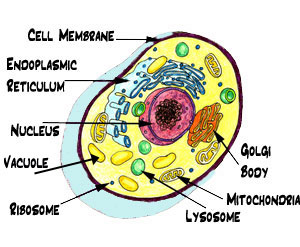
This interactive map of plant and animal cells makes it easier to learn the different organelles.
1.- THE CELL
Cells are the Starting Point All living organisms on Earth are divided in pieces called cells. There are smaller pieces to cells that include proteins and organelles. There are also larger pieces called tissues and systems. Cells are small compartments that hold all of the biological equipment necessary to keep an organism alive and successful on Earth. All living organisms on Earth are divided in pieces called cells. There are smaller pieces to cells that include proteins and organelles. There are also larger pieces called tissues and systems. Cells are small compartments that hold all of the biological equipment necessary to keep an organism alive and successful on Earth. A main purpose of a cell is to organize. Cells hold a variety of pieces and each cell has a different set of functions. It is easier for an organism to grow and survive when cells are present. If you were only made of one cell, you would only be able to grow to a certain size. You don’t find single cells that are as large as a cow. Also, if you were only one cell you couldn’t have a nervous system, no muscles for movement, and using the internet would be out of the question. The trillions of cells in your body make your life possible. One Name, Many Types There are many types of cells. In biology class, you will usually work with plant-like cells and animal-like cells. We say animal-like because an animal type of cell could be anything from a tiny microorganism to a nerve cell in your brain. Plant cells are easier to identify because they have a protective structure called a cell wall made of cellulose. Plants have the wall; animals do not. Plants also have organelles like the chloroplast (the things that make them green) or large water-filled vacuoles.  We said that there are many types of cells. Cells are unique to each type of organism. Humans may have hundreds of types of cells. Some cells are used to carry oxygen (O2) through the blood (red blood cells) and others might be specific to the heart. If you look at very simple organisms, you will discover cells that have no defined nucleus (prokaryotes) and other cells that have hundreds of nuclei (multinucleated). The thing they all have in common is that they are compartments surrounded by some type of membrane. |
The cell nucleus acts like the brain of the cell. It helps control eating, movement, and reproduction. If it happens in a cell, chances are the nucleus knows about it. The nucleus is not always in the center of the cell. It will be a big dark spot somewhere in the middle of all of the cytoplasm (cytosol). You probably won’t find it near the edge of a cell because that might be a dangerous place for the nucleus to be. If you don’t remember, the cytoplasm is the fluid that fills cells. |
CELL FUNCTIONS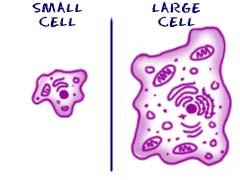 All cells have a purpose. If they don’t do anything productive, they are not needed anymore. In the big picture, a cell’s purpose is much more important than acting as small organizational pieces. They had their purpose long before they started working together in groups and building more advanced organisms. When alone, a cell’s main purpose is to survive. All cells have a purpose. If they don’t do anything productive, they are not needed anymore. In the big picture, a cell’s purpose is much more important than acting as small organizational pieces. They had their purpose long before they started working together in groups and building more advanced organisms. When alone, a cell’s main purpose is to survive. Even if you were a single cell, you would have a purpose. You would have to survive. You would be moving around (probably in a liquid) and just trying to stay alive. You would have all of your pieces inside of you. If you were missing a piece you needed to survive, you would die. Scientists call those pieces organelles. Organelles are groups of complex molecules that help a cell survive. All Cells are not Created Equal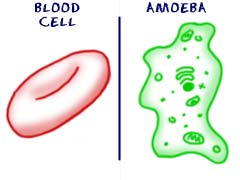 In the same way that cells survive in different ways; all cells have different types and amounts of organelles. The larger a cell becomes the more organelles it will need. It makes sense if you think about it. If you are a big cell, you will need to eat more than a little cell. You will also need to convert that food into energy. A larger cell would need to eat more and may wind up having more mitochondria to process that food into energy. In the same way that cells survive in different ways; all cells have different types and amounts of organelles. The larger a cell becomes the more organelles it will need. It makes sense if you think about it. If you are a big cell, you will need to eat more than a little cell. You will also need to convert that food into energy. A larger cell would need to eat more and may wind up having more mitochondria to process that food into energy. While they might have a purpose, more advanced cells have a difficult time surviving on their own. A cell from your brain could not survive in a Petri dish for long. It doesn’t have the right pieces to live on its own. It does have the ability to transmit electrical systems around your body. An amoeba could survive in a dish forever, thrive, and reproduce. On the other hand, that amoeba will never help you transmit electrical impulses. The brain cell is far more advanced and has specific abilities and organelles. Simpler cells have a better chance of surviving on their own while complex cells can accomplish tasks that are more advanced.
|
 We suppose it would be good to know what happens during those phases. Always remember - PMATI!
 Anaphase:
1st term Project: THE HUMAN BODY
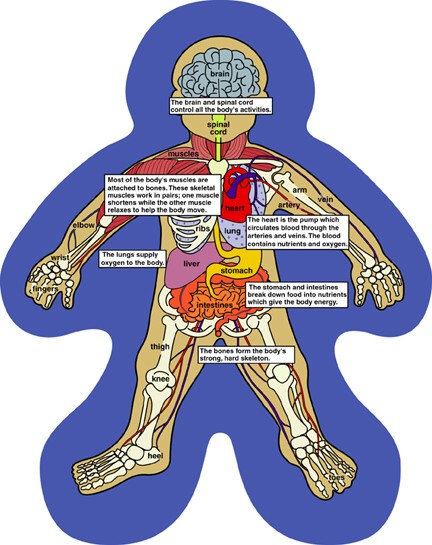
Now you know the title of the first term project.
We’re learning A BIT MORE about the Human Body and things related to it.
Click here to start reviewing some facts about the Human Body, and don’t forget to take mental notes of all the new information you find.
SCIENCE THIS YEAR
As you all know, this year we are not using books in Science, we’re working on projects instead.
This year, more than ever, we are ALL working and helping finding information about the topics we are going to learn (Human Body, Technology, History and Geography).
Remember that when you learn by doing you achieve much more knowledge than when you only learn by listening (or pretend to listen). That is because in the first case you are an active part of your learning process, you may have to choose what you want to learn, you may have to investigate, you may have to hear (and respect) other ideas and you may have to present your own ones.
Bearing this in mind I encourage all of you to work hard this year and to enjoy doing it.
INVENTIONS IN HISTORY

PREHISTORIC ART and HISTORY
Useful websites to learn more about the Prehistoric times.
Hope you like them.
A virtual tour of the cave paintings
Cave Art (+ other important pieces of art in history)
An online documentary about the story of our origins
Unit 14: DIFFICULT WORDS

Archaelogy: the study of the past, based on objects or parts of buildings that are found in the ground.
Excavation: the dig in the ground to look for old objects or buildings that have been buried for a long time, to find something.
Tool: a piece of equipment such as a hammer, that you hold in your hand(s) and use to do a particular job.
Weapon: an object which is used for fighting or for killing people, such as a spear, sword, etc.
Fabric: cloth or soft material that is used for making clothes, curtains, etc.
To last: to continue for a period of time.
Shelters: protection from danger or bad weather; a small building that gives protection, for example from bad weather or attack.
Branches: one of the main parts of a tree that grows out of the thick central part; a part of a government or other large organization that deals with one particular aspect of its work.
Sparks: a very small bright piece of burning material; a flash of light that is caused by electricity.
To slide: to move or make something move smoothly along a surface.
Plough: a large farm tool which is pulled by a tractor or by an animal.
Sedentary: involving a lot of sitting down; not active.
ÁLVARO (5ºC) RECOMMENDS:
¿Sabes ya dónde está Valladolid? ¿y Soria y Teruel?
Álvaro Montalvo nos recuerda un juego para practicar la situación de las comunidades autónomas de España y sus provincias.
Esperamos que os guste.
LA POBLACIÓN DE ESPAÑA
Pincha en Juegos interactivos - "alumnado", después en 3er ciclo. Una vez en las actividades del 3er ciclo, pincha en la bola del mundo "mi planeta" y después en el cartel con la gráfica de "la población de España". Ahí encontraras información y distintas actividades para reforzar lo aprendido en clase en la unidad 12.
Unit 12: DIFFICULT WORDS

Phoenicians: Phœnicia was an ancient civilization centered in the north of ancient Canaan, with its heartland along the coastal regions of modern day Lebanon, Syria and Israel.
Carthaginians: the first civilization that developed within the city’s sphere of influence. It refers to a series of cities on the Gulf of Tunis, from a Phoenician colony of the 1st millennium BCE to the current suburb outside Tunis, Tunisia.
Visigoths: the Visigoths were one of two main branches of the Goths, an East Germanic tribe; the Ostrogoths being the other. Together these tribes were among the barbarians who disturbed the late Roman Empire during the Migration Period.
Inhabitant: a person or animal that lives in a place.
Rural: connected with the country, not the town.
Urban: connected with a town or city.
GEOGRAFÍA ESPAÑOLA
Lots of information in Spanish about our geography.
Ríos y mares de España
¡Entrénate con Espini! Así podrás conocer mejor la situación de los ríos y mares de España.
Juegos educativos: RIOS DE ESPAÑA
In this webpage you will find games to study and practice the names of the main rivers in Spain.
There are also other games to review the name of all the Spanish Autonomous Communities and Mathematics games.
Enjoy learning!
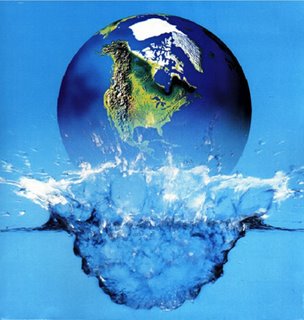
THE WATER CYCLE
Unit 10: DIFFICULT WORDS
Scarce: not existing in large quantities, hard to find.
Resources: a supply of something, a piece of equipment, etc. that is available for somebody to use.
Recycle: to put used objects and materials through a process so that they can be used again.